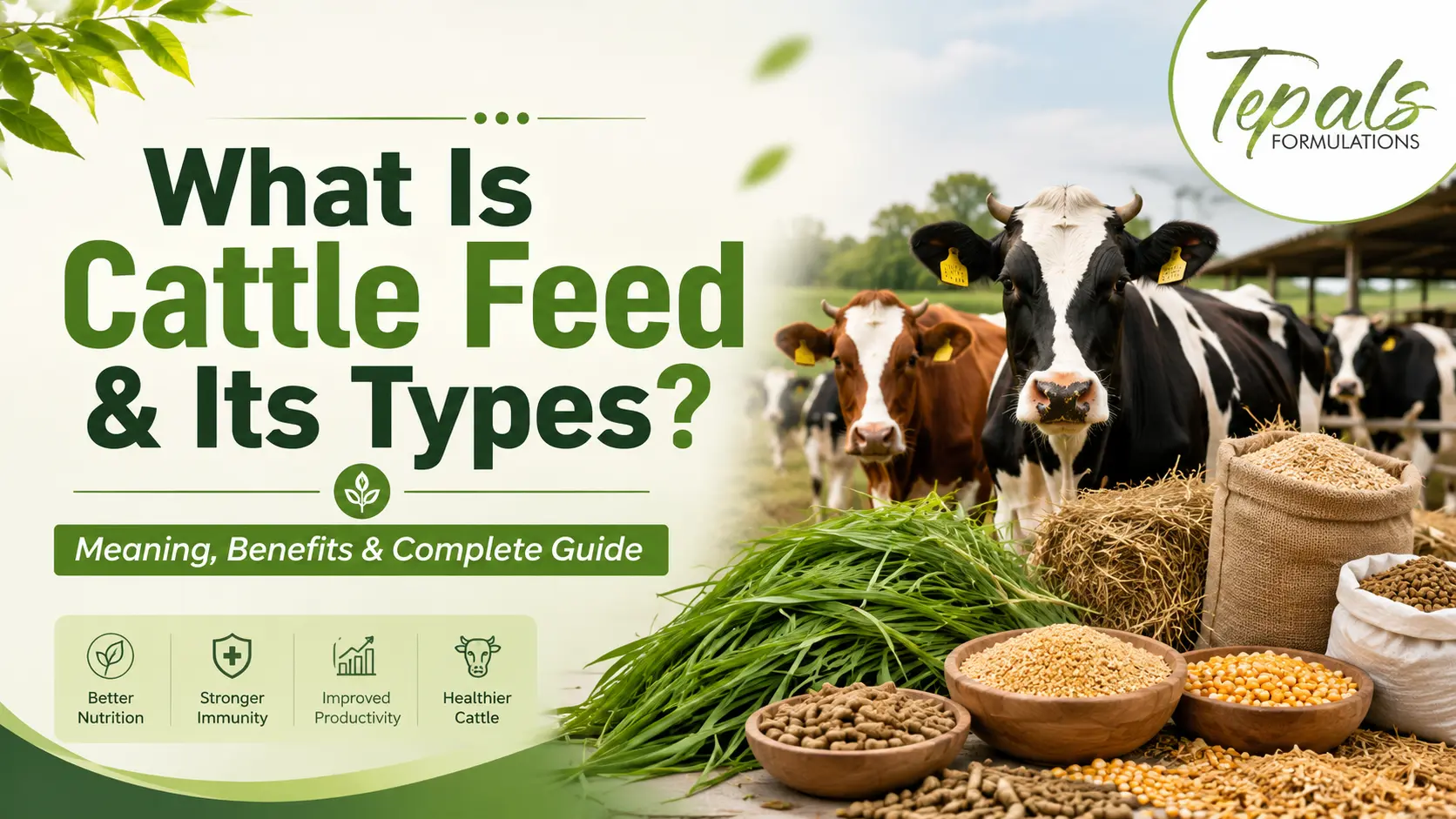
Feeding cattle is a very important aspect of the health, growth, milk production, and general performance of the livestock. Learning about the types of cattle feed can help dairy farmers, cattle owners, feed suppliers, and other professionals in the livestock business to understand the nutritional requirements of animals at various stages of life.
What Is Cattle Feed?
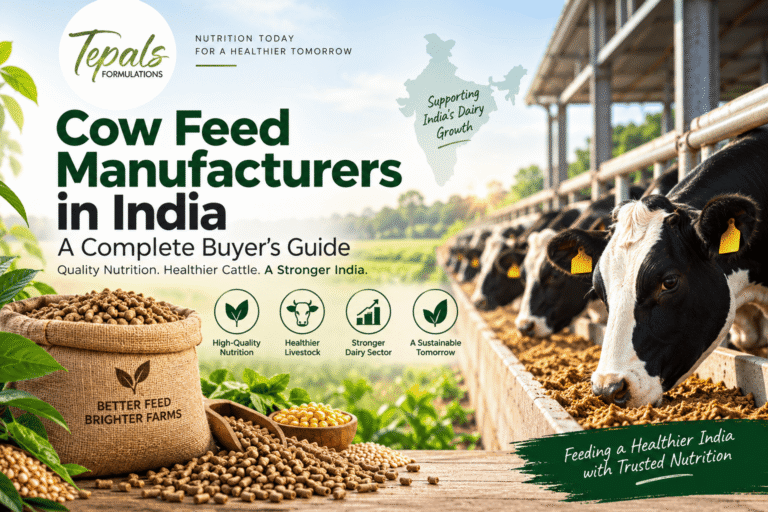
Cattle feed is food given to cows, buffaloes, calves, bulls, and other cattle to provide them with nutrition. It may include roughage, grains, protein sources, minerals, vitamins, and feed supplements.
A balanced ration for cattle will provide energy, protein, fibre, minerals, and vitamins. They are good for digestion, immunity, body weight, milk production, fertility, and activity during the day.
Cattle feed goes beyond “food.” A complete nutritional system keeps cattle healthy and productive.
Why Is Cattle Feed Important?
Good cattle nutrition directly impacts animal performance. The animals are in poor health, produce little milk, grow poorly, and have digestive and reproductive problems.
The right cattle feed helps:
- Milk production
- Improved body weight
- Good digestion.
- Strong bones and muscles.
- More robust immunity
- Increased fertility
- Rapid calf growth More
- productivity in general
The quality of feed is of particular importance for dairy animals, as milk production is very dependent on nutrition.
Common Types of Cattle Feed
There are various types of feed for cattle on offer in the management of dairy farms and livestock. The various feeds serve different functions.
1. Roughage Feed
There are many important types of cattle feed, and roughage is one of them. Cattle feed that has roughage is high in fiber and is important for the health of the rumen. Cattle are ruminant animals, and fiber is important for proper digestion.
Some common examples of roughage are:
- Green fodder
- Dry fodder
- Hay
- Straw
- Silage
- Pasture grass
Green fodder has high moisture and nutrient content. Dry fodder helps to maintain the balance of fiber. Silage is green fodder that has been fermented and is stored for a long time to use when fresh fodder is unavailable.
2. Concentrate Feed
Feed referred to as concentrate is high in energy and protein. This feed is usually administered alongside roughage to improve productivity, especially in dairy and growing cattle.
Some common ingredients of concentrate feed are:
- Maize
- Barley
- Wheat bran
- Rice bran
- Oil cakes
- Soybean meal
- Groundnut cake
- Cottonseed cake
Concentrate feed is important for high-yielding dairy cattle since feeding them roughage is not enough to meet their full nutritional needs.
3. Protein-Rich Feed
Protein is an important macronutrient for the growth of muscles, production of milk, support and development of pregnancy and calves. Protein-rich feed for cattle is crucial for lactating animals and growing calves.
Some common protein feed sources are soybean meal, mustard cake, groundnut cake, cottonseed cake, and some other oilseed meals.
Protein deficiency greatly impacts the rate of growth, production of milk, and the body condition of the cattle.
4. Energy Feed
Energy feed supplies the required calories for activities that are performed during the day, for the production of milk, and for the maintenance of weight and body.
5. Mineral Mix
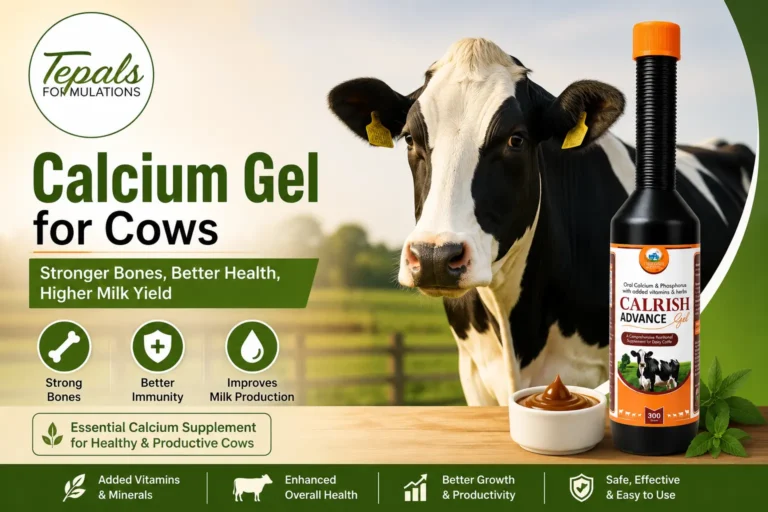
Minerals are required in small amounts but play a very important role in the health of cattle. Calcium, phosphorus, magnesium, zinc, copper, and other trace minerals for bones, fertility, immunity, and milk production.
Mineral mixtures usually fill nutritional gaps in the daily ration.
The balance between calcium and phosphorus is very important in dairy cattle, particularly in the peri-parturient and lactation situations.
6. Vitamins
Vitamins support the immune system, metabolism, reproduction, growth, and general health. Cattle may require additional vitamins when under stress, pregnant, recovering from illness, or producing large quantities of milk.
The most commonly used vitamins in cattle nutrition are Vitamin A, Vitamin D3, Vitamin E, and the B-complex vitamins.
7. Nutrition supplementaire
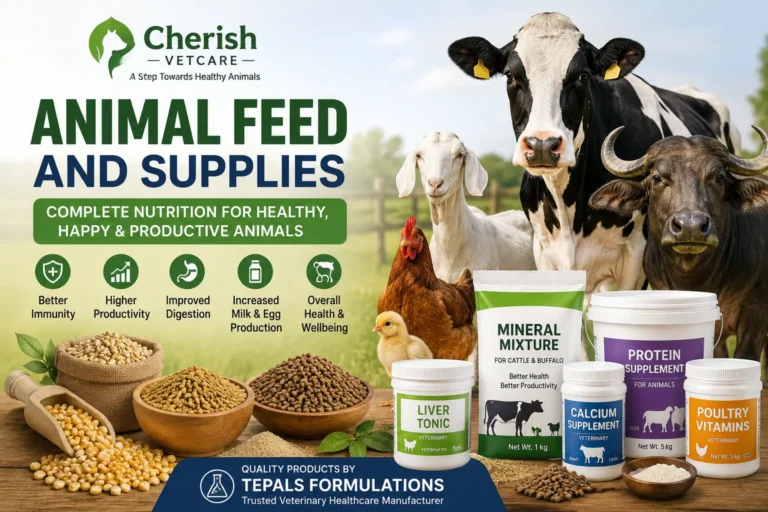
Feed supplements are added to regular cattle feed to improve nutrition and performance. They may contain minerals, vitamins, probiotics, enzymes, yeast, amino acids, toxin binders, liver-supporting ingredients, or energy boosters.
Supplements are not a replacement for basic feed. They are used to plug nutritional gaps and cater for specific needs.
8. Calf Starter Feed
Calf Starter Feed is designed for young calves. It helps to build up the rumen and supports early growth. A good calf starter should be balanced in energy, protein, minerals, and vitamins. It is introduced gradually with the milk feedings. Good calf nutrition lays a strong foundation for future productivity.
9. Food for dairy cattle
Dairy cattle feed is formulated to maintain milk production. It is made up of roughage, concentrates, protein sources, minerals, and vitamins.
Balanced dairy feed is required because milk production increases the demand for nutrients in high-yielding cows and buffaloes.
The feed for dairy cattle should be chosen depending on the milk yield, body weight, stage of lactation, and quality of available fodder.
Selecting the Best Cattle Feed
Choosing the right cattle feed depends on a few factors:
- Age of animal
- Weight of the body
- Level of milk production
- Pregnancy or breastfeeding
- Breed.
- health status
- Forage Availability
- Agricultural Management System
Different feed requirements exist for growing calves, lactating cows, pregnant buffalo, and dry animals. That’s why a one-size-fits-all feed plan doesn’t work for every animal.
For better results, farmers should maintain a balance between roughage, concentrate, minerals, vitamins, and clean drinking water.
FAQs
1. What is cattle feed?
Cattle feed is food given to cattle to provide the nutrients they need. It is roughage, grain, protein, minerals, vitamins, and supplements.
2. Name the major types of cattle feed?
Types of cattle feed: Roughage, concentrate feed, protein feed, energy feed, mineral mixture, vitamin supplements, calf starter feed.
3. Which cattle feed is best for milk production?
Best combination for milk production: Combination of green fodder, dry fodder, concentrate feed, mineral mixture, and clean water.
4. Is mineral mixture necessary for cattle?
Yes, mineral mixture helps in bone strength, fertility, immunity, and milk production. It helps to cover deficiency of mineral in daily diet.
5. Can cattle survive only on grass?
Cattle can eat grass, but high-producing dairy animals usually need additional concentrate, minerals, and supplements for better performance.
Abstract
Farmers, cattle owners, and livestock businesses should be aware of the different types of cattle feed. The composition of cattle feed includes roughage, concentrates, protein sources, energy feed, minerals, vitamins, and supplements. Each type has its own role in animal health and productivity.
A balanced feeding plan may improve digestion, growth, immunity, fertility, and milk production. For the best results, the cattle feed must be selected as per the age, production stage, health condition, and nutritional requirement of the animal.