If you manage a dairy farm or livestock, you are familiar with the early signs: a single cow coughing, soon followed by others showing runny noses, labored breathing, and reduced feed intake.
Respiratory issues significantly impact profitability in livestock management. Even minor infections divert energy from milk production or weight gain. When cattle have difficulty breathing, feed intake drops, resulting in financial loss.
Having a reliable veterinary cough syrup on hand helps interrupt this cycle by clearing the airways, soothing throat irritation, and encouraging animals to resume feeding. Below, we will examine the causes of respiratory outbreaks, early detection methods, and the benefits of selecting a high-quality liquid formula for your herd.
Why Respiratory Health Drops in Livestock
Cows and buffaloes have massive lungs, but those lungs are surprisingly sensitive to environmental changes. Most respiratory problems don’t just happen out of nowhere. A combination of stress and environmental factors triggers them.
The Most Common Culprits
- Poor Barn Ventilation: When air gets trapped in a barn, ammonia from urine and dust from dry feed build up fast. These particles irritate the lining of the animal’s respiratory tract, causing a dry, hacking cough.
- Weather Swings: Sudden drops in temperature, heavy rain, or high humidity can stress an animal’s immune system, making it vulnerable to viral and bacterial infections.
- Shipping Fever (Bovine Respiratory Disease): Moving cattle in trailers is highly stressful. The close quarters and changing weather often lead to a complex of respiratory infections commonly called shipping fever.
- Dusty Feed: Feeding heavily pulverized or dusty grain can cause immediate mechanical irritation in the throat.
What Does a Veterinary Cough Syrup Actually Do?
A veterinary cough syrup is a specially formulated liquid medication designed to relieve respiratory distress in animals. It works by acting as a mucolytic (breaking down thick mucus) and an expectorant (helping the animal cough up the loosened mucus). This clears the airway, reduces throat inflammation, and restores normal breathing patterns without harming the complex digestive system of ruminants.
Featured Product: CheriKof by Cherish Vetcare
When treating a sick animal, it is essential to use proven remedies supported by reliable manufacturing standards. Dedicated respiratory support products address this need.
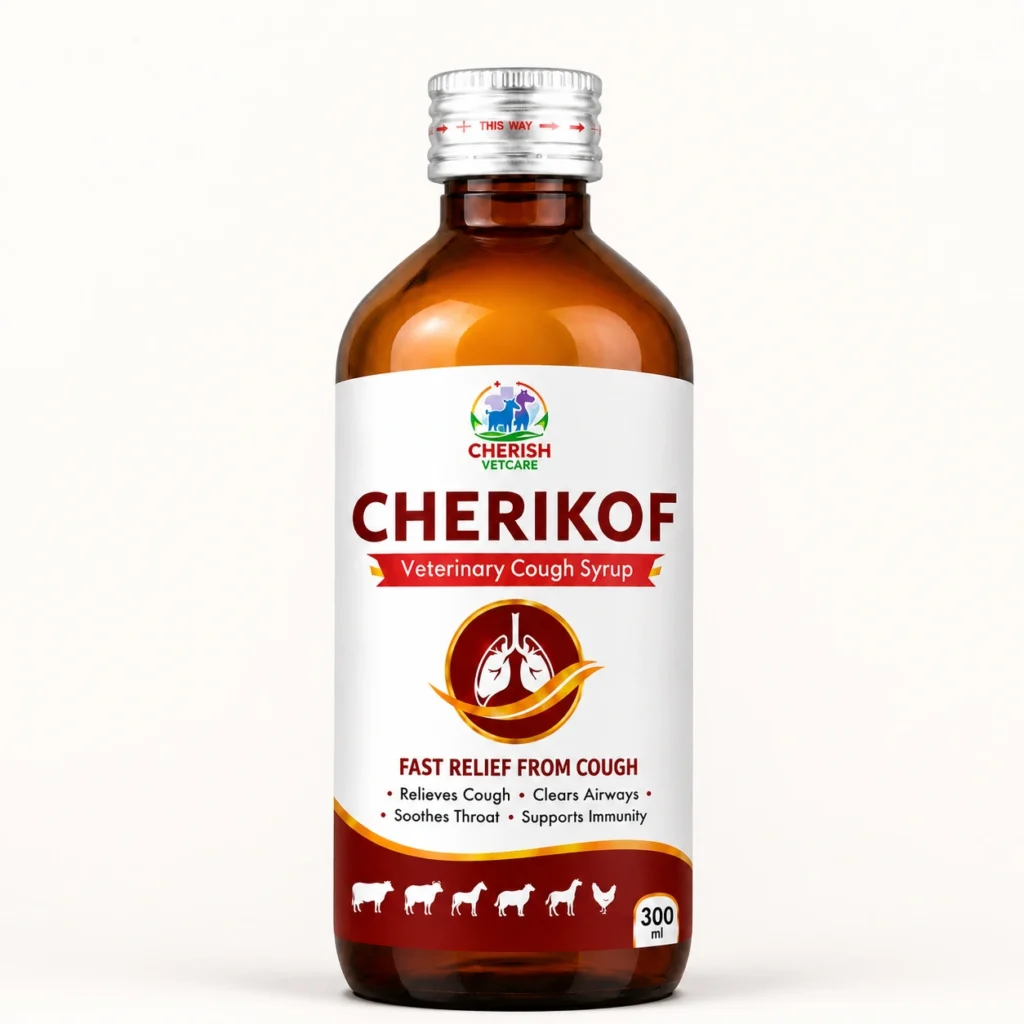
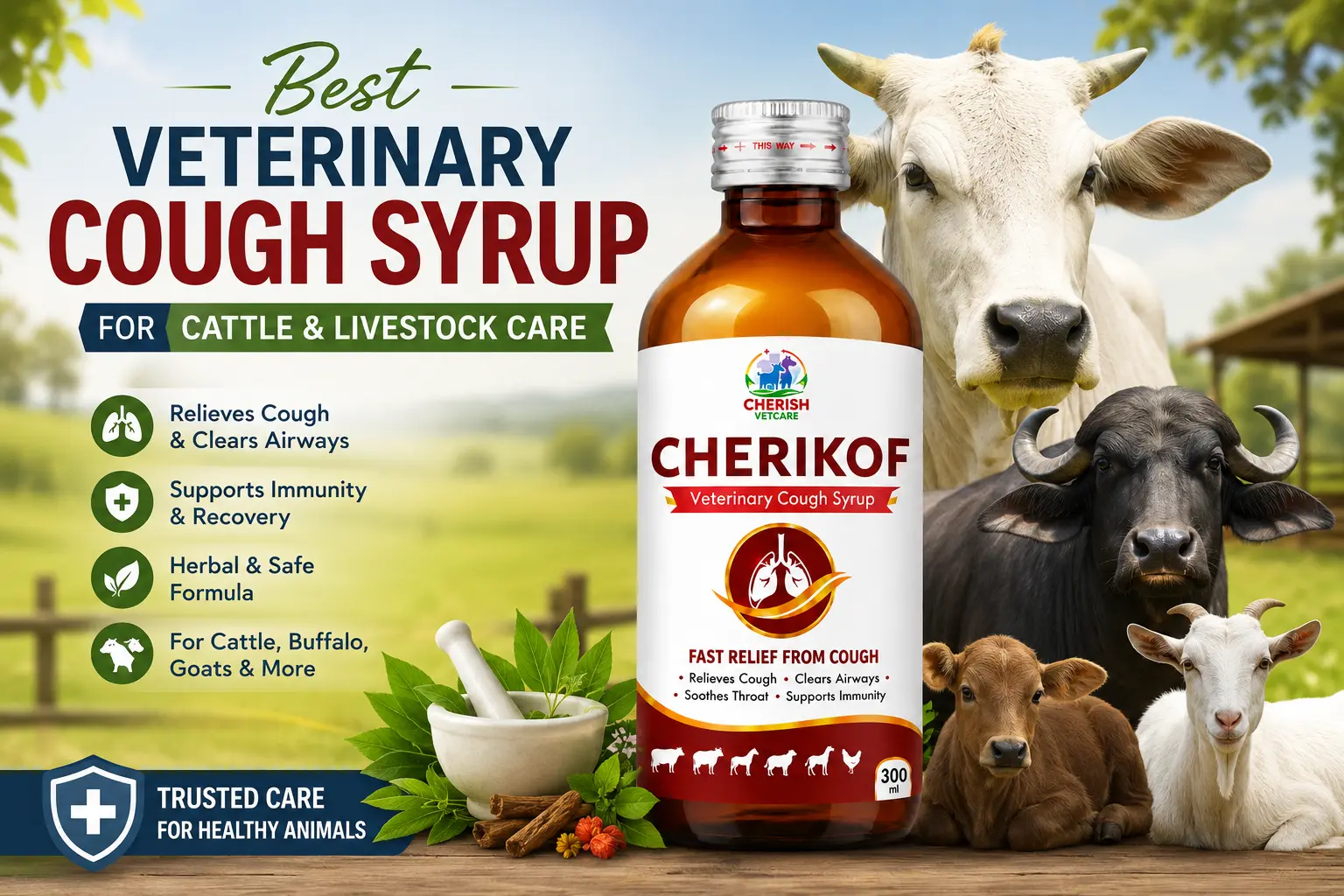
CheriKof is a leading product in the respiratory care market.
Product Specifications
- Brand: Cherish Vetcare
- Product Name: CheriKof
- Category: Veterinary cough and respiratory support
- Dosage Form: Liquid
- Pack Size: 300 ML
Why a Liquid Formula Works Best
CheriKof’s liquid form offers significant benefits for farmers. Sick animals often refuse feed-mixed powders due to reduced appetite, and administering pills or boluses can be difficult if the animal has respiratory issues.
A 300 mL liquid bottle enables precise dosing and direct administration with a drenching gun. The syrup coats the throat for immediate relief and allows rapid absorption of active ingredients.
How to Spot the Warning Signs of Respiratory Distress
Initiate treatment before the infection progresses to the lungs and leads to pneumonia. Monitor for these early signs during daily herd checks:
- Change in Breathing Rate: Healthy adult cattle breathe 10 to 30 times per minute. Rapid, shallow panting indicates a potential issue.
- Nasal Discharge: Small amounts of clear liquid are normal. Thick white, yellow, or green mucus may indicate infection.
- Head Extension: An animal extending its neck and lowering its head is attempting to open its airway to increase oxygen intake.
- Isolation: Sick livestock may stand apart from the herd and avoid the feed trough.
Choosing Between Different Cough Remedies
Not all farm remedies are equally effective. Understanding the various approaches to treating coughs will help you choose the most appropriate option.
Comparison Table: Types of Respiratory Treatments
| Treatment Type | How It Works | Best Used For | Speed of Relief |
| Veterinary Cough Syrup (e.g., CheriKof) | Thins mucus and soothes the throat | Active coughing, nasal discharge, general cold symptoms | Fast (Immediate throat coating) |
| Antibiotic Injections | Kills bacterial infections causing the disease | Severe pneumonia, high fever | Moderate (Takes 24-48 hours to show results) |
| Herbal/Homeopathic Drops | Supports natural immunity and eases mild symptoms | Mild irritation, preventative care | Slow to Moderate |
| Anti-inflammatory Drugs (NSAIDs) | Reduces swelling in lung tissue | Extreme pain, high fever alongside a cough | Fast |
Tip: A veterinary cough syrup is often used alongside antibiotics. The antibiotics fight the root bacteria, while the syrup manages the physical symptoms, keeping the cow comfortable enough to keep eating.
Best Practices for Administering Liquid Syrup
Giving medicine to a 1,500-pound animal requires a bit of technique to keep both you and the cow safe.
- Restrain Safely: Put the cow in a headgate or stanchion. You need them still so you don’t accidentally push the liquid into their windpipe.
- Use the Right Tool: A clean drenching syringe (without a needle) or a long-necked drenching bottle is perfect.
- Positioning: Lift the animal’s head slightly—just parallel to the ground. If you lift their nose too high, they can’t swallow properly.
- Go Slow: Insert the syringe tip into the corner of the mouth, over the base of the tongue. Push the plunger slowly. Let the animal swallow naturally between pumps.
- Clean Up: Always wash your drenching equipment with hot water after use to prevent the spread of bacteria to the next animal.
FAQs
1. Can I give human cough syrup to my cattle?
Absolutely not. Human medications are not made for a ruminant’s digestive system. They can destroy essential bacteria in a cow’s stomach, causing severe digestive failure. Always use a dedicated veterinary cough syrup.
2. How long does a 300 ML bottle of CheriKof last?
This depends on the dosage instructions on the label and the animal’s weight. Generally, a 300 ML bottle provides enough volume for the acute treatment of an adult cow or for treating several smaller animals, such as calves or goats.
3 .such asl cough syrup taint the milk?
Most non-antibiotic, herbal, or standard expectorant syrups do not have milk withdrawal times, but you must always read the manufacturer’s label. If the syrup contains specific regulated chemicals, the label will explicitly state the required milk withholding period.
4. Why is my calf coughing after drinking milk?
This often relates to the feeding angle rather than a respiratory infection. If a calf drinks too fast or from a bucket placed too low, milk can enter the windpipe, causing a reflex cough. If the cough lasts all day, treat it as a respiratory issue.
5. How quickly should I expect to see results?
With a quality liquid syrup, you should notice less hacking and easier breathing within 24 to 48 hours. If the animal does not improve after three days or develops a high fever, call your veterinarian immediately.
6. Does dust in the hay cause a real cough or just irritation?
Dust causes immediate mechanical irritation. If an animal constantly breathes in dusty, moldy hay, that irritation damages the lung lining. This damage allows real bacterial infections to develop.
7. Can I mix liquid cough syrup into the water trough?
It is highly discouraged. You cannot control how much water a sick animal drinks. They might get under-dosed, or a healthy animal might drink it all. Always administer it directly via drenching.
8. Should I separate the coughing animal from the herd?
Yes. If you suspect an infection, immediately isolate the sick animal in a clean, well-ventilated, dry pen. This stops the spread of the bug through shared water troughs and close contact.
Conclusion
Managing livestock health requires staying ahead of the weather and barn environment. Respiratory issues spread fast and hit hard. Quick intervention is key to saving your milk yields and protecting your animals.
Stocking a high-quality veterinary cough syrup like CheriKof ensures you are ready the moment you hear the first tell-tale hack in the barn. By choosing products that offer fast-acting liquid relief, you help your cattle clear their airways, breathe easier, and return to normal feeding routines quickly and safely.