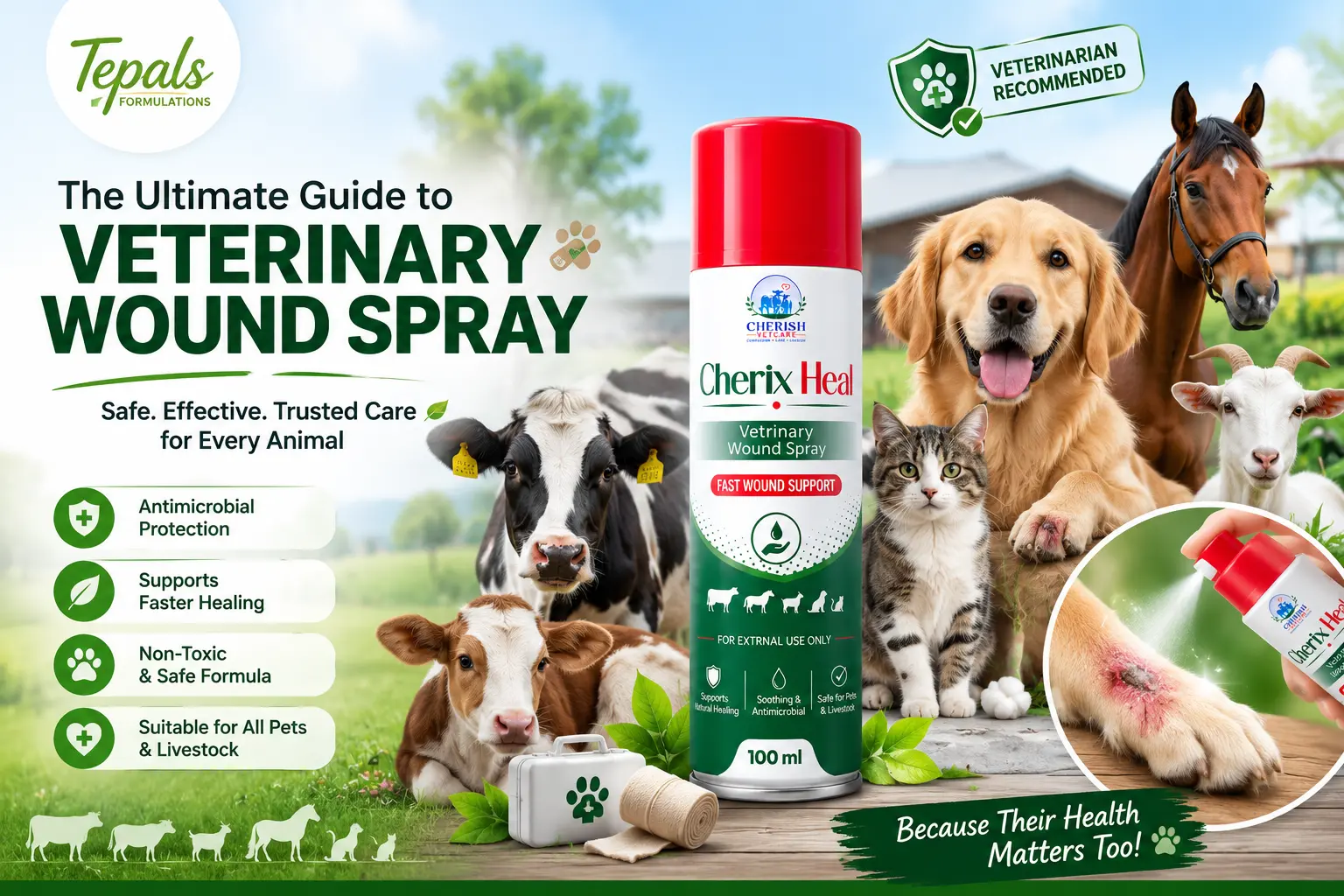
Minor cuts and scrapes are common, whether you have an active dog, a cat prone to minor injuries, or livestock navigating rough terrain. When your animal is injured, clean the wound and prevent infection. A quality veterinary wound spray serves this purpose.
To keep your pets safe and reduce unnecessary veterinary visits for minor injuries, keep a dependable animal wound spray and a first-aid kit on hand. This guide explains the function of these sprays, key ingredients to consider, and how to apply them with minimal stress to your animal.
What is a Veterinary Wound Spray?
A veterinary wound spray is a specially formulated, topical liquid used to clean, disinfect, and promote healing in animal injuries. These sprays flush out dirt, kill harmful bacteria, and create an optimal environment for the skin to heal. Unlike human ointments, they are designed to be safe if an animal accidentally licks them.
Animal wound spray serves as the first line of defense, preventing bacteria from turning minor scratches into more serious issues.
Why You Can’t Just Use Human Products
Some may ask, “Can I use a human wound spray on my dog?”
The answer is no. Animals have different skin pH levels than humans. Human products often contain harsh alcohols, hydrogen peroxide, or artificial fragrances that may delay healing or irritate your pet’s skin. In addition, if a pet licks a human ointment, they could ingest toxic ingredients. Animal-specific sprays are formulated for animal safety.
Common Types of Animal Wound Sprays
Not all sprays are made equal. Depending on the healthcare brands you look at, you will see a few common active ingredients. Here is a simple breakdown so you know what you are buying.
- Hypochlorous Acid: This is a big one right now. It is naturally produced by white blood cells in both humans and animals. It kills bacteria on contact but doesn’t sting at all. It is incredibly safe, even around the eyes and mouth.
- Chlorhexidine: A classic antiseptic. It is very effective at cleaning out dirty wounds and preventing infections. You will often see it mixed with soothing agents.
- Silver-based Sprays: Colloidal silver has natural antimicrobial properties. It is great for creating a barrier over the wound.
- Natural/Herbal Sprays: These often use aloe vera, tea tree oil (use with extreme caution, as it is toxic to cats), or calendula. They are best for minor irritations rather than dirty cuts.
How to Tell if a Spray is High Quality
If you look at how healthcare products are made, you know manufacturing standards matter. When you buy a spray for your pet, make sure it comes from a reliable source.
Look for brands that emphasize clear, pure ingredients. The best sprays have a simple ingredient list without artificial dyes or harsh preservatives. A quality manufacturing process ensures the liquid is stable and won’t lose its bacteria-fighting power after sitting on your shelf for a month.
When to Treat at Home vs. When to Call the Vet
A good rule of thumb is that sprays are for surface-level issues. Let’s look at a quick comparison to help you decide.
| Condition | Treat at Home (Use Spray) | See the Vet Immediately |
| Depth | Surface scrapes, minor cuts, bug bites | Deep punctures, gaping wounds, visible fat/muscle |
| Bleeding | Stops with gentle pressure in a few minutes | Continuous bleeding, spurting blood |
| Location | Paws, legs, back, belly | Deep inside the ear, severe eye injuries |
| Animal’s State | Acting normal, eating, walking fine | Lethargic, refusing food, heavily limping, in shock |
Tips: If a minor wound starts to smell bad, feels hot to the touch, or oozes yellow/green pus after a few days, stop home treatment and get to the vet. That means infection has set in.
Step-by-Step: How to Apply Wound Spray Properly
Putting anything on a hurt animal can be tricky. They are scared, and their instinct is to pull away. Here is how to do it calmly and safely.
1. Assess and Calm
First, take a deep breath. If you are frantic, your animal will be frantic. Get down on their level. Offer a high-value treat to distract them. If you have a friend or family member nearby, ask them to hold and gently pet the animal.
2. Clear the Area
If the wound is covered in mud or debris, gently rinse it with clean, lukewarm water first. If the hair is long and matted into the cut, you might need to clip it away with blunt-nosed safety scissors carefully.
3. Spray with Purpose
Hold the disinfectant spray a few inches away from the skin. Give it a firm, confident spray. You want to wet the area to thoroughly flush out any remaining dirt.
4. Let it Dry
Do not wipe it off. Let the liquid air dry. This gives the active ingredients time to break down the bacteria.
5. Prevent Licking
This is the hardest part. Even if the spray is safe to lick, a rough tongue will irritate the wound and keep it from closing. Use an Elizabethan collar (the “cone of shame”), a soft inflatable collar, or, if necessary, lightly wrap the area with a breathable bandage.
FAQs
1. Can I use hydrogen peroxide instead of an animal wound spray?
No. Hydrogen peroxide kills bacteria but also damages healthy tissue and delays healing. Use products specifically formulated for animals.
2. Will an antiseptic spray sting my dog’s cut?
Most modern, high-quality sprays (especially those using hypochlorous acid) do not sting. However, sprays with high alcohol content might. Always check the label for “sting-free” formulas.
3. What happens if my cat licks the veterinary wound spray?
Good animal sprays are non-toxic if ingested in small amounts. However, licking the wound prevents healing. Try to stop them from licking using a collar or light bandage.
4. How often should I apply the spray?
For an active minor cut, spray 2 to 3 times a day until the wound is fully closed. Always follow the instructions on the bottle.
5. Can I use these sprays on hot spots?
Yes. Antimicrobial sprays are excellent for cleaning and drying out hot spots (moist dermatitis) and stopping the itch cycle.
6. Does it work on horses and livestock?
Absolutely. Many sprays are safe for dogs, cats, horses, and farm animals. Just buy a bottle large enough for livestock needs.
7. Should I bandage the wound after spraying?
It depends. Many surface scrapes heal best exposed to air. If the cut is on a paw that will get dirty, a light, breathable bandage changed daily is a good idea.
8. How long does a bottle last once opened?
Most high-quality sprays last 12 to 24 months after opening, provided they are stored in a cool place out of direct sunlight.
Conclusion
Handling a pet injury doesn’t have to be a cause for panic. By keeping a trusted veterinary wound spray at home, you take control immediately. You can clean the cut, stop bacteria, and help your animal feel comfortable again quickly.
Remember, the goal is safe, efficient healing. Use products made for animals, monitor the wound as it heals, and never hesitate to call your vet if anything looks wrong.