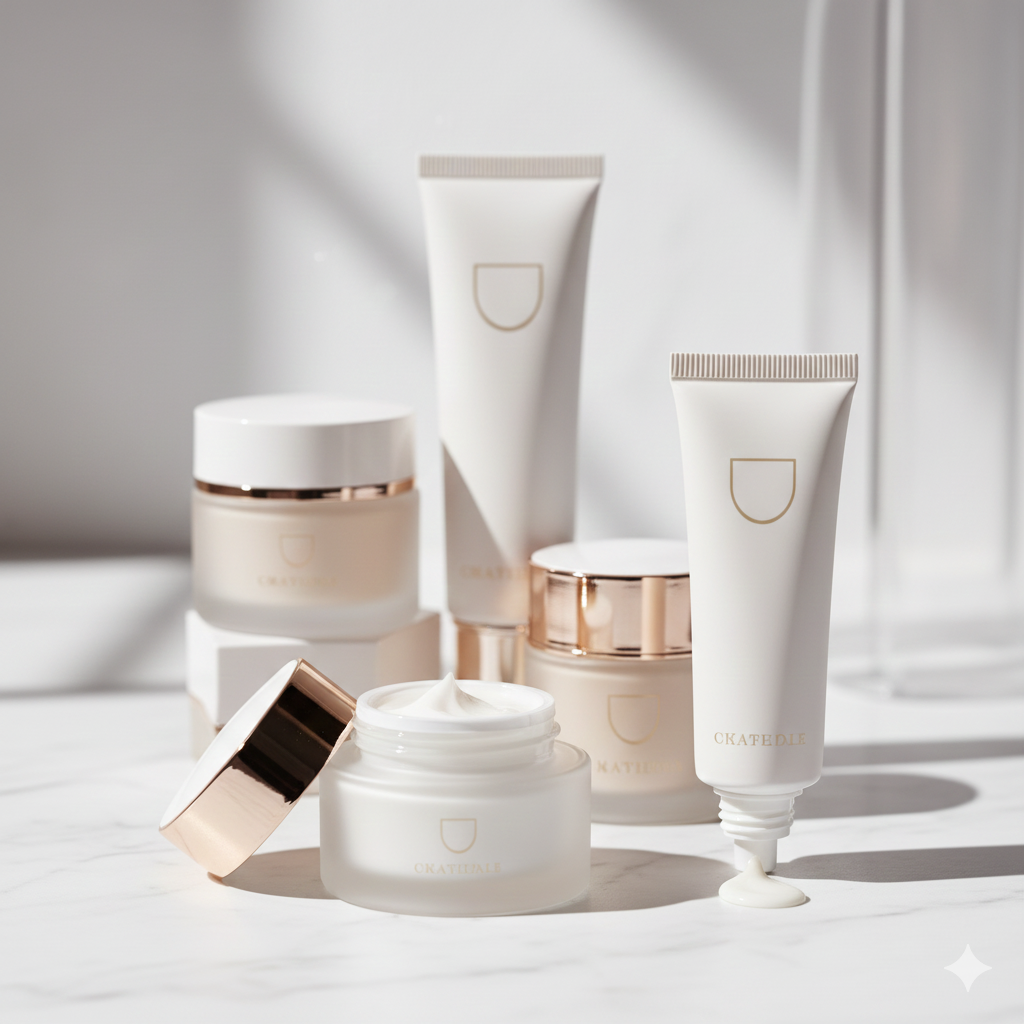
Private Label Cosmetic Manufacturing Process: What Brand Owners Should Understand Before Starting
If you’re searching for the private label cosmetic manufacturing process, chances are you’re already past the idea stage.
You’re not trying to learn what cosmetics are.
You’re trying to understand:
-
How manufacturing actually works in India
-
What happens after you give the product idea
-
Where quality or compliance problems usually come from
-
Whether a manufacturer can support you when volume increases
This is written for founders, distributors, exporters, and brand owners who want clarity before committing money and time.
Private label manufacturing is not “ready product sticking your label”
This is the first misconception many people have.
Private label cosmetic manufacturing is not about picking a random product and pasting your brand name.
A proper private label process involves:
-
Understanding your brand positioning
-
Choosing or adjusting formulations responsibly
-
Manufacturing under controlled conditions
-
Maintaining batch-wise quality and compliance
-
Planning production in a way that allows scale
If any of these are skipped, the brand suffers later — usually after launch.
How the private label cosmetic manufacturing process actually starts
Everything starts with a clear discussion, not pricing.
A manufacturer needs to understand:
-
What type of product you want (cream, serum, shampoo, facewash, etc.)
-
Who it is for (mass market, premium, dermat-focused)
-
Whether you want fast launch or long-term differentiation
-
How much volume you realistically plan now and later
This step decides cost, formulation choice, packaging options, and scalability.
Manufacturers who rush this stage usually create problems down the line.
Formulation: proven base or customised approach
Once requirements are clear, formulation is finalised.
Most brands choose one of two routes:
-
A proven, already-stable formulation to launch quickly
-
A semi-custom or custom formulation for better differentiation
What matters here is not fancy ingredients, but:
-
Stability
-
Skin safety
-
Compliance with Indian cosmetic rules
-
Consistent performance across batches
A good manufacturer will also tell you what not to do. That honesty saves brands later.
Raw material sourcing is where quality really begins
This part doesn’t get enough attention.
In cosmetic manufacturing, raw material quality affects:
-
Texture
-
Performance
-
Shelf life
-
Customer complaints
Professional private label manufacturers:
-
Source from approved suppliers
-
Check materials before use
-
Store them properly
-
Maintain traceability batch-wise
Low-quality sourcing might reduce initial cost, but it increases returns, complaints, and reputation damage.
Manufacturing is about control, not speed
After raw materials are approved, manufacturing starts.
Depending on the product, this may involve:
-
Heating and mixing
-
Homogenisation
-
Controlled blending
-
Cooling and settling
What really matters here:
-
Process discipline
-
Temperature control
-
Consistent mixing sequence
-
No rushing batches
Many quality issues happen because someone tries to “save time”.
Good manufacturing is repeatable manufacturing.
Quality control happens throughout, not just at the end
Quality control is not a checkbox.
In a proper private label cosmetic manufacturing process, checks happen:
-
During raw material handling
-
During production
-
After the finished product is ready
Batch records are maintained so if something goes wrong, it can be traced.
If a manufacturer avoids talking clearly about QC, that’s a warning sign.
Packaging, labelling, and batch coding matter more than people think
Once the product clears quality checks, it goes into final packaging.
This includes:
-
Filling into jars, bottles, tubes, or pumps
-
Proper label application
-
Batch number and manufacturing date
-
Storage and dispatch readiness
Mistakes here can create compliance issues, especially when distribution expands or exports begin.
Compliance is why most brands choose private label manufacturing
In India, cosmetic manufacturing is regulated.
If you’re working with a licensed manufacturing unit:
-
You do NOT need your own manufacturing license
-
The manufacturer handles GMP practices
-
Documentation and batch records are maintained
Your responsibility as a brand owner is to verify compliance, not manage it yourself.
Ignoring compliance early almost always creates problems later.
Scalability: the real test of a manufacturer
Many manufacturers can make one good batch.
Very few can:
-
Maintain the same quality at higher volumes
-
Control cost when demand increases
-
Manage raw material consistency long-term
Before finalising a manufacturer, always ask:
-
What happens when my volume doubles?
-
Will the formulation behave the same?
-
Will delivery timelines stay stable?
Scalability should be discussed before the first order, not after success.
How Tepals Formulations approaches private label manufacturing
Tepals Formulations works as a manufacturing unit for brands, not as a consumer-facing company.
The approach focuses on:
-
Clear process explanation
-
Quality-controlled production
-
Compliance-first manufacturing
-
Planning batches with future scale in mind
The goal is not just to manufacture a product, but to support brands that want to grow steadily.
Questions brand owners usually ask
Do I need my own cosmetic manufacturing license?
No. The license is held by the manufacturing unit.
Is private label cosmetic manufacturing legal in India?
Yes, when done through a licensed and compliant manufacturer.
How long does the process usually take?
Typically 6–10 weeks depending on product type and volume.
Can formulations be customised later?
Yes, but changes should be planned carefully.
Is it possible to scale pan-India or for export?
Yes, if scalability is considered from the start.
Final thought
If you’re looking into the private label cosmetic manufacturing process, what you really need is not a brochure.
You need:
-
Clear answers
-
Process transparency
-
Honest discussion about quality and scale
👉 Talk to Our Manufacturing Expert
or
👉 Request Manufacturing Quote
It’s better to understand everything properly now than fix problems later.