Documents & Certifications Required to Start Cosmetic Manufacturing in India
If you are planning to launch a cosmetic brand, one of the first and most critical questions you’ll face concerns the requirements for a cosmetic manufacturing license in India.
At this stage, brand owners are not looking for theory. They want clarity:
- Which licenses are mandatory?
- Who should hold the license—brand or manufacturer?
- What documents are actually required?
- How to avoid regulatory delays?
This guide is written specifically for decision-ready B2B buyers evaluating manufacturing partners in India.
Do You Need a Cosmetic Manufacturing License to Launch a Brand?
Here’s the most important clarification upfront:
You do NOT need a cosmetic manufacturing license if you are working with a licensed manufacturing unit.
The manufacturer holds the required licenses.
You sell products under your brand name.
This is why most startups, D2C brands, and distributors choose contract or private label manufacturing instead of setting up their own factory.
Where are cosmetic manufacturing licenses issued in India?
Drug and Cosmetic Act,1940 and Drug and Cosmetic Rules, 1945. Under this, cosmetic manufacturing in India is regulated
As compliance is aligned with CDSCO and licenses are issued by the state drug control department,
It’s been mandatory to maintain proper filings for the licenses and certifications for a cosmetic manufacturing unit.
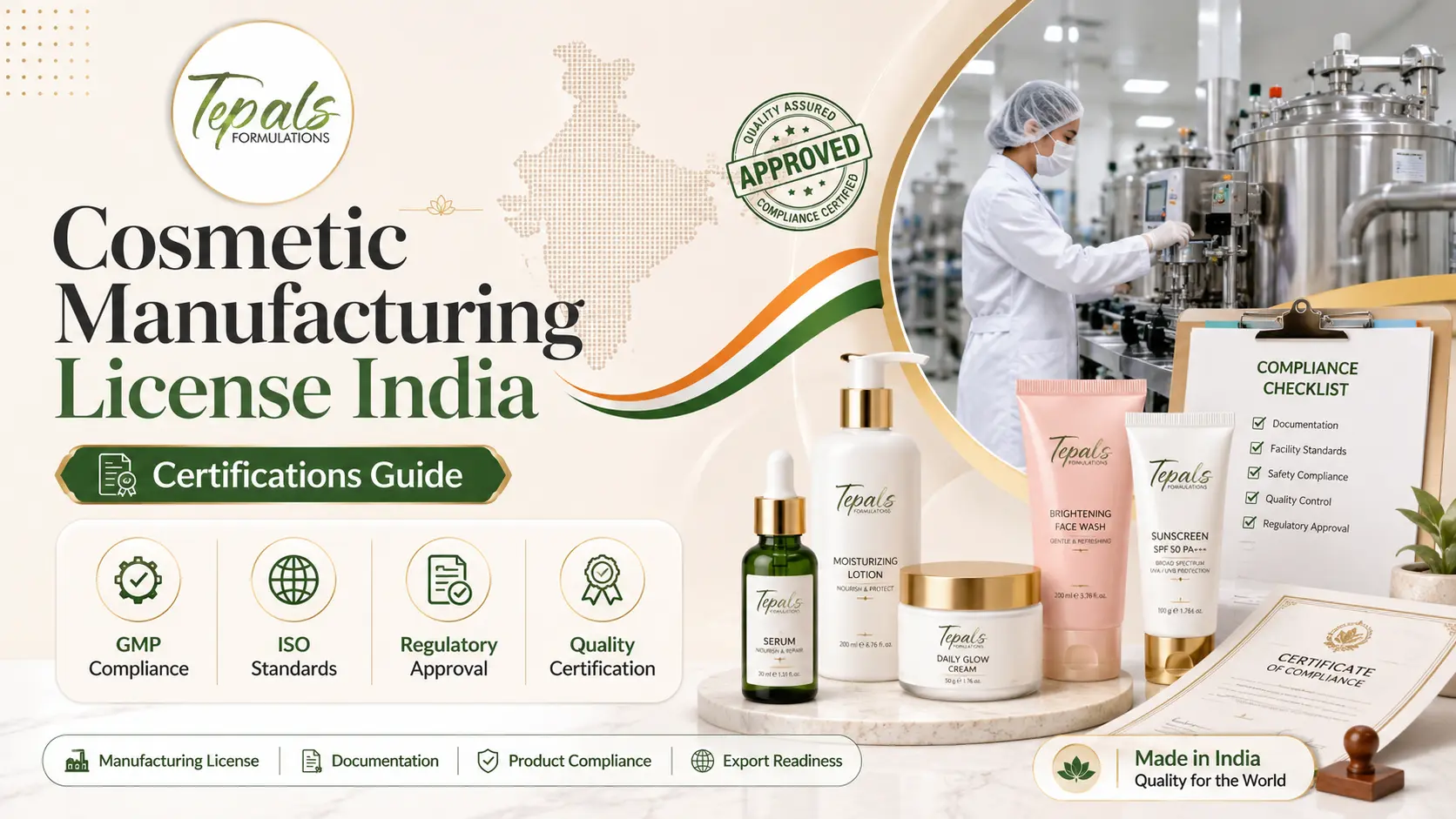
All legal cosmetic manufacturing units must hold the following approvals
1. Cosmetic Manufacturing License (India)
This is the primary license that authorizes a unit to manufacture cosmetic products.
Issued to: Manufacturing facility
Covers:
- Approved product categories
- Manufacturing premises
- Equipment & quality systems
As a brand owner, it’s your responsibility to check and verify the manufacturing license, as a professional manufacturing facility will always have proper documentation.
2. GMP Cosmetic License
A GMP cosmetic license stands for Good Manufacturing Practices. If the manufacturing unit has GMP.
This ensures:
- Hygiene & sanitation control
- Batch consistency
- Quality assurance systems
- Traceability & documentation
For brand credibility, distributor trust & export readiness, GMP compliance is critical.
3. FDA Cosmetic Approval (India)
In India, “FDA cosmetic approval” typically refers to approval by the State FDA / Drug Controller, not the US FDA.
This approval ensures:
- Ingredient compliance
- Product safety
- Legal manufacturing authorization
A reliable manufacturer will clearly explain which authority issued the approval and for what scope.
4. ISO Certification (Recommended)
Iso certifications strengthen trust for b2b buyers, export – focused brands, and institutional clients
ISO reflects standardized quality management systems.
What are the documents required for Cosmetic Manufacturing
The documents a manufacturer should have are
- Updated certifications
- Quality control reports
- Batch manufacturing records
- Product-wise approval records
These are non-negotiable for safe manufacturing.
Now we will see what the documents required from the brand owner are
As a brand owner or distributor, you are typically required to provide:
- Brand name trade mark
- Firm details and GST
- Packaging & label artwork
- Ingredient preference (if any)
- Target market (domestic/export)
You are not expected to manage regulatory filings yourself when working with a licensed unit.
Private Label vs Own Manufacturing: Compliance Comparison
| Aspect | Own Manufacturing | Private Label Manufacturing |
|---|---|---|
| License Requirement | Brand owner | Manufacturer |
| Regulatory Burden | Very High | Handled by manufacturer |
| Time to Start | Long | Fast |
| Cost | Extremely High | Controlled |
| Risk | High | Low |
This is why private label manufacturing is the preferred entry model for new brands.
What are the Common Compliance Mistakes New Brands Make
Avoid these costly errors:
- Working with unlicensed manufacturers
- Not verifying certifications
- Assuming “FDA approved” without documentation
- Starting production before documentation clarity
- A professional manufacturer prevents these mistakes upfront.
How Tepals Formulations Supports Compliance-Ready Manufacturing
At Tepals Formulations, with a team of experts, we ensure:
- Licensed & compliant production environment
- GMP-aligned manufacturing practices
- Documentation clarity
- Process transparency
- Long-term regulatory reliability
By focusing on this important point, you can protect your brand from compliance risk.
When Should You Consider Setting Up Your Own Manufacturing Unit?
Setting up your own unit makes sense only if you have large, consistent volumes and have strong regulatory expertise with full operations control.
Outsourcing manufacturing is the smarter choice for most startups and growing brands.
Frequently Asked Questions (FAQ)
1. Do I need a cosmetic manufacturing license to sell products?
No. The license is held by the manufacturer, not the brand.
2. What does GMP stand for in cosmetic manufacturing?
GMP ensures consistent quality, safety, and hygiene during production.
3. Is FDA cosmetic approval mandatory in India?
Approval from the State Drug Controller is mandatory for manufacturers.
4. Can I export cosmetics manufactured in India?
Yes, provided the manufacturer meets export compliance requirements.
5. How to verify a manufacturer’s licenses?
A professional manufacturer will share valid certificates and explain their scope clearly.
Ready to Manufacture Without Compliance Risk?
Now the next step is expert guidance—not guesswork. If you are planning to launch a cosmetic brand and want licensed, GMP-compliant manufacturing.