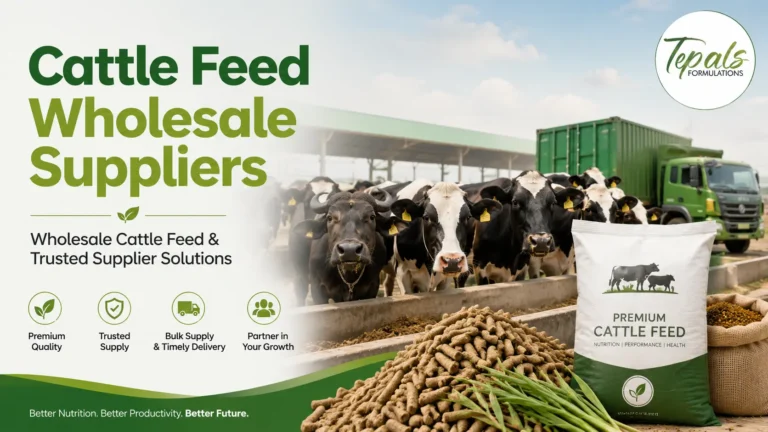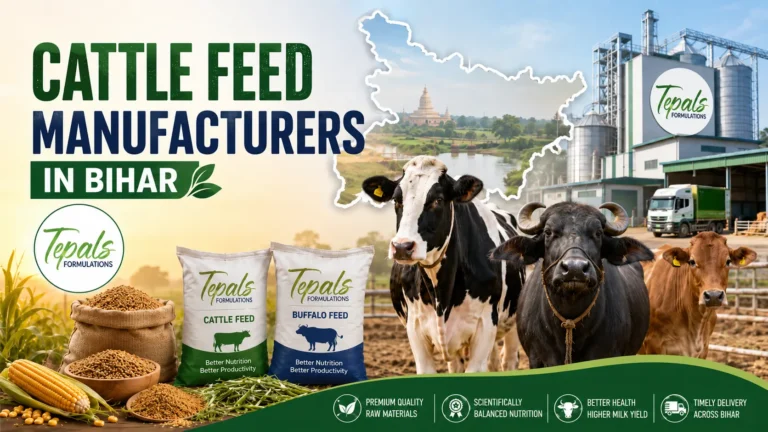
Cattle feed plays a direct role in the nutrition, productivity and overall management of dairy animals. However, cattle do not require the same nutritional support at every stage of life. A growing calf, a high-yielding dairy cow, a dry pregnant animal and a working bullock have different nutritional requirements.
That is why manufacturers and suppliers should look beyond generic feed products. The modern cattle nutrition market demands appropriately developed products, consistent raw materials, reliable quality testing, practical packaging and clear usage information.
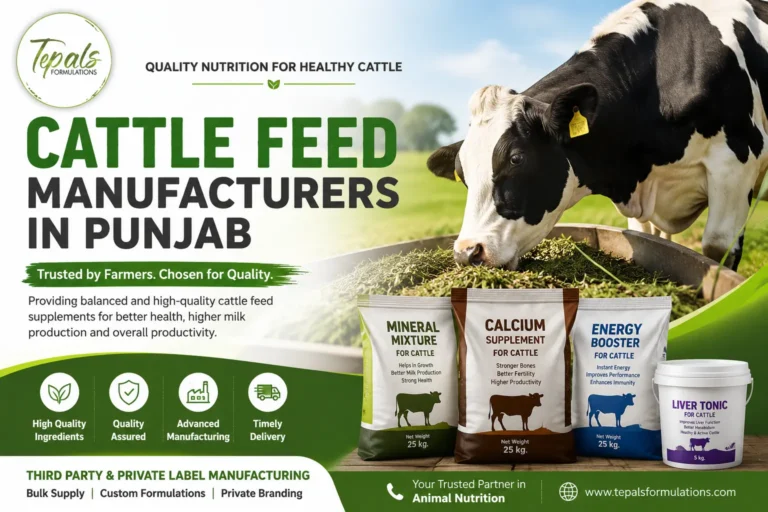
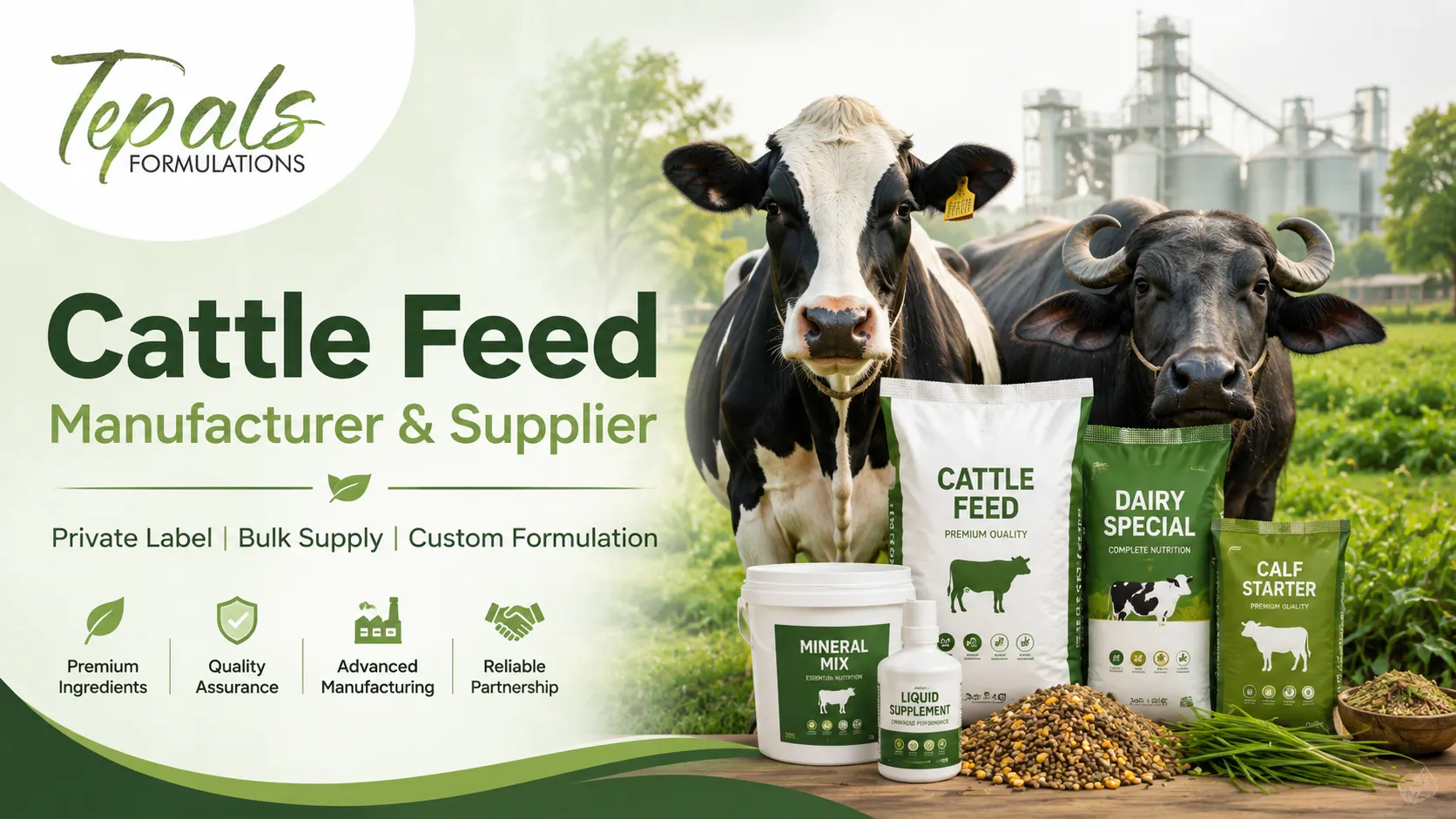
Tepals Formulations provides veterinary third-party manufacturing, private-label support, custom product development, bulk manufacturing and product-packaging assistance. These services may help distributors, veterinary companies and livestock-nutrition brands develop cattle feed supplements under their own brand, subject to formulation feasibility, regulatory classification and manufacturing scope.
What Is Cattle Feed?
Cattle feed is the combination of feed materials supplied to cows, buffaloes and other bovine animals to provide energy, protein, fibre, minerals, vitamins and other essential nutrients.
The Bureau of Indian Standards describes compounded cattle feed as a mixture of concentrate ingredients in appropriate proportions that provides protein, energy, minerals and vitamins required for normal health, milk production and reproduction.
Cattle feeding generally includes more than one component:
- Green fodder
- Dry fodder
- Concentrate or compound feed
- Mineral mixtures
- Feed supplements
- Clean drinking water
A cattle feed supplement should not automatically be treated as a replacement for the animal’s complete daily ration. Supplements are generally concentrated products added to the basal diet for a specific nutritional or functional purpose.
Difference Between Cattle Feed and Cattle Feed Supplements
The terms “cattle feed” and “cattle feed supplement” are frequently used interchangeably, but they may represent different product categories.
| Factor | Compound Cattle Feed | Cattle Feed Supplement |
|---|---|---|
| Main purpose | Provides a concentrated source of multiple nutrients | Adds selected nutrients or functional ingredients |
| Common format | Mash, pellets, crumbles or cubes | Powder, granules, liquid, gel or bolus |
| Typical components | Grains, bran, protein meals, agro-industrial by-products, minerals and vitamins | Minerals, vitamins, amino acids, electrolytes, probiotics, enzymes, energy ingredients or herbs |
| Usage | Fed alongside the basal diet in prescribed quantity | Added to feed or drinking water as directed |
| Product positioning | Nutritional feed | Targeted nutritional support |
| Development requirement | Full feed formulation | Specific ingredient and dosage-based formulation |
NDDB explains that compound cattle feed commonly contains grains, brans, protein meals or cakes, chunnies, agro-industrial by-products, minerals and vitamins. It can be manufactured in mash, pellet, crumble or cube form.
For suppliers, this distinction is important because formulation, manufacturing processes, labelling, claims, documentation and quality parameters can vary according to the exact product category.
Types of Cattle Feed and Nutritional Products
A strong cattle nutrition portfolio should be developed around the actual needs of livestock owners instead of launching several products with similar claims.
1. Compound Cattle Feed
Compound cattle feed combines different concentrate ingredients in balanced proportions. Available for formulation for:
- High yielding dairy animals
- Low to medium yielding animals
- Growing animals
- Dry animals
- Pregnant animals
- Buffaloes
- Working bullocks
The current BIS specification IS 2052:2023 specifies Type I feed for high yielding animals and Type II feed for low to medium yielding animals.
2. Calf Starter Feed
Calf starter is intended for young calves transitioning towards solid feed. A suitable product should consider palatability, digestibility, energy, protein, mineral balance and the calf’s stage of development.
The product should be formulated by a qualified animal nutrition professional rather than relying only on a high crude-protein percentage.
3. Dairy Cattle Feed
Dairy cattle feed is developed to support the maintenance and productive requirements of milk-producing animals. The nutrient profile should consider factors such as:
- Body weight
- Milk yield
- Milk-fat level
- Stage of lactation
- Existing green and dry fodder
- Local feed ingredients
- Environmental conditions
NDDB’s ration-balancing approach also considers the animal’s age, milk production, milk fat and current feeding regime while recommending balanced nutrition.
4. Mineral Mixtures
A cattle mineral mixture is designed to supplement minerals that may be inadequate in local fodder and conventional feed ingredients.
Depending on the formulation and market requirement, a mineral product may include macro and trace minerals. The exact composition should be based on the intended animal category, feeding programme and applicable standard.
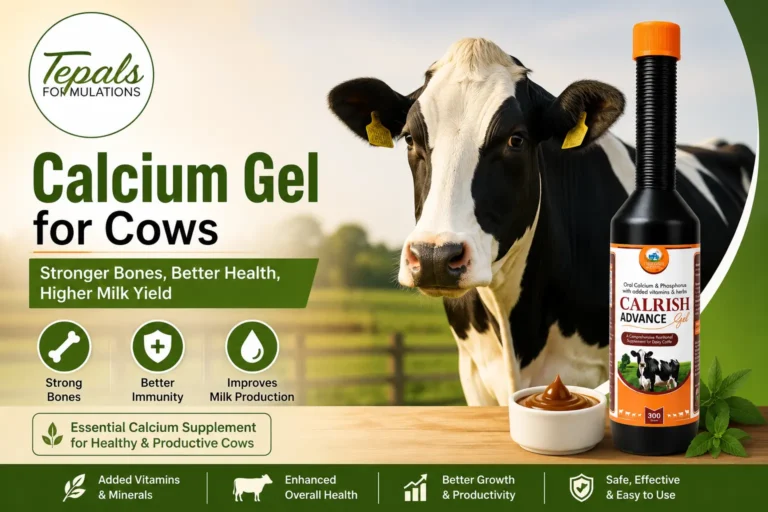
5. Calcium Supplements
Calcium supplements may be marketed in liquid, powder, gel or other approved formats. They are commonly positioned for dairy animals, growing animals and animals with increased nutritional requirements.
Suppliers should avoid promoting every calcium formulation as suitable for all cattle. The ingredient profile, concentration, daily serving and intended stage should be clearly communicated.
6. Energy Supplements
Energy-support products can be relevant during periods of increased nutritional demand. These may include powder, liquid or gel-based products.
However, an energy supplement should not be promoted as a substitute for adequate feed intake or professional treatment of a metabolic condition.
7. Bypass Fat Products
Bypass fat is used as a concentrated energy source in certain dairy feeding programmes. NDDB notes that bypass-fat supplementation may be useful for high-yielding dairy animals during advanced pregnancy and early lactation, when energy demand increases and feed intake may be inadequate.
Its inclusion level should be determined according to the animal, milk production and total ration.
8. Bypass Protein Products
Bypass protein products are designed so that a portion of the protein avoids degradation in the rumen and becomes available for digestion later in the digestive system.
NDDB states that treated protein meal can be supplied directly or incorporated into cattle feed according to the production level and recommended feeding programme.
9. Digestive and Rumen-Support Supplements
Depending on the formulation, these products may contain:
- Live yeast cultures
- Probiotics
- Prebiotics
- Enzymes
- Buffers
- Herbal ingredients
- Selected vitamins and minerals
Claims should remain consistent with the ingredients, evidence, intended use and applicable feed-product requirements.
10. Electrolyte Supplements
Electrolyte formulations may be developed for use during hot weather, transportation, reduced feed intake or other periods of nutritional stress.
They may be available as water-soluble powder or liquid. Instructions should explain dilution, duration of use, storage and whether the product is intended for individual or group administration.
11. Total Mixed Ration
Total Mixed Ration, commonly called TMR, combines roughage and concentrate ingredients into a uniform ration.
NDDB explains that conventional TMR may contain chopped green fodder or silage, cereals, cereal by-products, protein sources, minerals, vitamins and feed additives. Crop-residue-based dry TMR may improve intake consistency, reduce feed wastage and be customised according to the animal’s lactation stage.
Important Ingredients Used in Cattle Feed
The selection of ingredients should be based on nutrient quality, digestibility, safety, consistency, availability and cost.
Energy Sources
Common energy ingredients may include:
- Maize
- Barley
- Wheat
- Rice bran
- Molasses
- Other suitable cereal by-products
Energy supports body maintenance, activity, growth, pregnancy and milk production.
Protein Sources
Frequently used protein sources include:
- Soybean meal
- Groundnut cake
- Cottonseed cake
- Mustard cake
- Other approved protein meals
Protein quality, digestibility and amino-acid availability can be as important as the total crude-protein percentage.
Fibre Sources
Cattle require adequate effective fibre for normal rumen activity. Fibre may come from green fodder, dry fodder, straw, grasses, crop residues and fibrous feed ingredients.
Concentrate feed should not displace the roughage necessary for rumen function unless the total ration has been professionally formulated.
Minerals and Vitamins
Minerals and vitamins support multiple physiological functions, including growth, skeletal maintenance, metabolism, reproduction and productive performance.
The formulation should avoid both deficiency and unnecessary excess. More of an ingredient does not automatically make the product better.
Functional Feed Ingredients
Functional products may include probiotics, enzymes, yeast cultures, amino acids, buffers, antioxidants, herbal extracts or other permitted ingredients.
Each ingredient should have a clear formulation purpose. Adding several popular ingredients at insignificant levels may improve the label but not necessarily improve product value.
Benefits of Balanced Cattle Feed
A balanced feeding programme helps provide nutrients in relation to the animal’s actual requirements.
Potential advantages include:
- Supporting normal body maintenance
- Supporting productive performance
- Promoting consistent feed intake
- Supporting growth in young animals
- Supporting reproductive nutrition
- Improving the utilisation of available fodder
- Helping reduce unnecessary feed wastage
- Supporting the economics of dairy farming
NDDB states that compound cattle feed can be a palatable source of nutrients for growing, adult, dry, milk-producing and pregnant animals. When used in prescribed amounts with the basal diet, it may help optimise milk-production costs and improve profitability.
Results still depend on genetics, health status, housing, water availability, fodder quality, climate, disease control and overall farm management. Feed alone should not be presented as a guaranteed solution for milk yield, fertility or disease prevention.
Cattle Feed Quality Standards Manufacturers Should Consider
Quality is one of the most important purchasing criteria for cattle feed suppliers. Nutritional value and safety of the final product can be influenced by inconsistent raw materials or poor storage.
Raw-Material Verification
Raw materials should be checked against defined purchase specifications. Evaluation may include:
- Identity
- Appearance and odour
- Moisture
- Nutrient value
- Contamination
- Adulteration
- History of supplier
- Storage condition
In-Process Controls
Manufacturers should control:
- Weighing accuracy
- Sequence of ingredients
- Mixing time
- Batch uniformity
- Grinding or particle size
- Liquid addition
- Equipment cleanliness
- Risks of cross-contamination
Finished-Product Testing
Depending on the product, finished-product testing may include:
Moisture
Crude protein
Crude fibre
Fat
Total ash
Acid-insoluble ash
Calcium
Phosphorus
Salt
Microbial quality
Heavy metals
Aflatoxins
Product uniformity
Under IS 2052:2023 compounded cattle feed has to meet defined requirements for sampling, testing, nutrient composition and contaminant control. The BIS summary specifically addresses harmful substances, aflatoxin B1, cadmium, packaging and mandatory label information.
Aflatoxin and Contaminant Control
Contaminated feed does not only affect cattle health. Certain contaminants can also enter the food chain through milk.
“Contaminants like aflatoxin B1, pesticides and heavy metals can pass from feed to milk, highlighting the importance of raw-material testing and storage controls for animal health and food safety,” explains NDDB.
Packaging and Storage
Feed packaging should protect the product from:
- Moisture
- Pest infestation
- Physical damage
- Contamination
- Excessive heat
- Loss of product identity
The pack should clearly display the product name, net quantity, batch details, manufacturing information, storage instructions, nutritional information, usage guidance and other mandatory declarations applicable to the product.
Private-Label Cattle Feed Manufacturing
Private-label manufacturing allows a distributor or veterinary company to market cattle nutrition products under its own brand while production is handled by a manufacturing partner.
A typical project may involve the following stages.
Step 1: Product Requirement
The buyer shares:
- Target animal
- Product category
- Intended benefit
- Preferred dosage form
- Required pack size
- Expected order quantity
- Target market
- Desired price segment
Step 2: Product Classification
The product must be correctly identified as compound feed, feed supplement, mineral mixture, veterinary medicine or another applicable category.
A product should not be presented as a feed supplement merely to avoid requirements applicable to medicines. It should be categorized according to its formulation, ingredients, intended use and label claims.”
Step 3: Formulation Development
The formulation team takes into account factors such as ingredient compatibility, dosage, stability, palatability, product form and commercial feasibility.
Manufacturers should also make sure that the proposed formula delivers meaningful levels of ingredients, not just a long composition panel.
Step 4: Packaging Selection
Common packaging options may include:
- Laminated pouches
- HDPE containers
- Buckets
- Bottles
- Drums
- Sachets
- Bulk bags
Packaging should be selected according to product stability, serving method, transport conditions and market positioning.
Step 5: Label and Artwork Review
The label should not include exaggerated claims such as guaranteed increase in milk, guaranteed fertility, treatment of disease or instant recovery unless such claims are legally permissible and properly substantiated.
Step 6: Pilot or Commercial Batch
Once the formula, commercial terms and artwork have been agreed the manufacturer can proceed according to the agreed batch size and production schedule.
Step 7: Testing and Dispatch
The finished products should be released only after the required quality checks have been done and the batch conforms to the approved specifications.
Why Suppliers Choose Tepals Formulations
Tepals Formulations presents itself as an end-to-end manufacturing partner offering private-label and third-party manufacturing services across veterinary and other product segments. Its stated services include custom product development, bulk manufacturing and product-packaging support.
For cattle nutrition businesses, the potential advantages of working with a manufacturing partner include:
Custom Product Development
Products may be developed according to the intended animal category, dosage form, market segment and packaging requirement, subject to technical and regulatory approval.
Private Labelling
Suppliers can develop products using their own brand name, label design and market positioning.
Multiple Dosage Forms
Cattle nutrition products may be available in powder, liquid, gel or other suitable formats depending upon the approved product range and manufacturing capability.
Packaging Support
Packaging can be planned around retail distribution, veterinary channels, bulk supply or institutional requirements.
Bulk Manufacturing
Bulk manufacturing can help established suppliers, veterinary distributors and livestock-product companies expand their range without establishing their own production facility.
Business Enquiry Support
Tepals Formulations lists its location as Ambala, Haryana, India, along with the contact number +91 9991912525 and email info@tepalsformulations.com. Product availability, minimum order quantities, manufacturing scope, certifications and timelines should be confirmed directly for each project.
How to Choose a Cattle Feed Manufacturer
Do not select a cattle feed supplier only on the basis of the lowest quotation. Low-cost feed may become expensive when batch consistency, palatability, packaging quality or customer acceptance is poor.
Before finalising a manufacturer, evaluate:
- Product-category experience: Confirm whether the company manufactures complete feed, supplements, mineral mixtures or veterinary products.
- Raw-material controls: Ask how suppliers are approved and incoming materials are tested.
- Formulation ability: To verify whether technical staff can develop products based on animal category and market requirement.
- Testing facilities: Verify if there are provisions for chemical, microbiological and contaminant testing.
- Documentation: Request of specification, certificates of analysis and batch records and proper licenses.
- Packaging Capability: Confirm pack sizes, containers, printed material and artwork meet MOQ requirements to support commercial viability of your distribution capability.
- Claims review: Review label claims for support and relevance to product classification.
- Batch Traceability: Finished batches should be traceable to raw materials and production records .
- Manufacturing scope: Verify that the facility’s approval and certification scope covers your exact cattle-feed or feed-supplement category.
Business Opportunities for Cattle Feed Suppliers
The cattle nutrition sector offers opportunities beyond selling one standard feed product.
Suppliers can build focused portfolios for:
- Dairy farmers
- Cattle farms
- Buffalo farms
- Veterinary clinics
- Dairy cooperatives
- Feed stores
- Rural retailers
- Veterinary distributors
- Livestock-development organisations
- Institutional buyers
A useful product portfolio may include a mineral mixture, calcium supplement, energy product, electrolyte powder, digestive supplement, bypass-fat product and selected farm-hygiene products.
The strongest suppliers generally combine suitable products with technical education, reliable stock availability, realistic claims and after-sales support.
Frequently Asked Questions
1. What is cattle feed?
Cattle feed is the combination of fodder, concentrate ingredients, minerals, vitamins and other nutrients supplied to cattle. Green fodder, dry fodder, compound feed, and targeted feed supplements are available.
2. What is cattle compound feed?
Compound cattle feed is a mixture of concentrate ingredients in proper proportions. It may contain grains, brans, protein meals, agro-industrial by-products, minerals and vitamins.
3. What is the difference between cattle feed and a cattle feed supplement?
Cattle feed contributes to the animal’s broader daily ration, while a supplement supplies selected nutrients or functional ingredients. A supplement does not necessarily replace green fodder, dry fodder or balanced concentrate feed.
4. Does Tepals Formulations provide private-label cattle products?
Tepals Formulations provides veterinary third-party manufacturing, private-label support, custom product development, bulk manufacturing and packaging support. Availability of a particular cattle feed or feed-supplement formulation should be confirmed directly with the company.
5. Can cattle feed be manufactured under my brand name?
Yes, private-label manufacturing can allow eligible cattle nutrition products to be manufactured and packaged under the buyer’s brand. The formula, classification, artwork, order quantity and commercial agreement must first be approved.
6. What is in cattle feed?
Common ingredient groups include grains, bran, oilseed meals or cakes, agro-industrial by-products, minerals and vitamins. The exact combination depends on the animal category and nutritional objective.
7. What to look for when buying cattle feed from suppliers
Suppliers should guarantee product specification, ingredient quality, laboratory testing, batch consistency, packaging, label compliance, minimum order quantity, manufacturing scope and supplier reliability.
8. Is the same cattlefeed good for all the animals?
No. Nutritional requirements differ according to age, body weight, production level, pregnancy, lactation stage, health and the existing basal diet.
9. Can cattle feed guarantee increased milk production?
No responsible manufacturer should guarantee a fixed milk increase for every animal. Milk output depends on genetics, health, stage of lactation, water, environment, fodder quality and total ration management.
10. What is the minimum order size for private label cattle products?
The minimum order quantity will be based on product form, formulation, batch size, packaging material and pack size. The quantity needed will also be impacted by custom printed pouches, cartons, labels and containers.
Conclusion
Cattle feed is not simply a mixture of inexpensive agricultural ingredients. A dependable product requires suitable formulation, consistent raw materials, controlled manufacturing, contaminant monitoring, protective packaging and accurate usage information.
Manufacturers and suppliers should also distinguish between complete compound cattle feed and targeted cattle feed supplements. This helps them select the correct manufacturing process, quality specifications, documentation and marketing claims.
Tepals Formulations offers third-party veterinary manufacturing, private-label development, bulk production and packaging support for businesses interested in building their own animal-nutrition product range. Before placing an order, companies have to communicate the detailed formulation, product classification, MOQ, packaging and manufacturing scope.
The best cattle feed business is built on consistent quality, practical formulations, transparent specifications and reliable supply, not exaggerated promises. Work with a manufacturing partner that understands both animal nutrition and the commercial needs of suppliers.