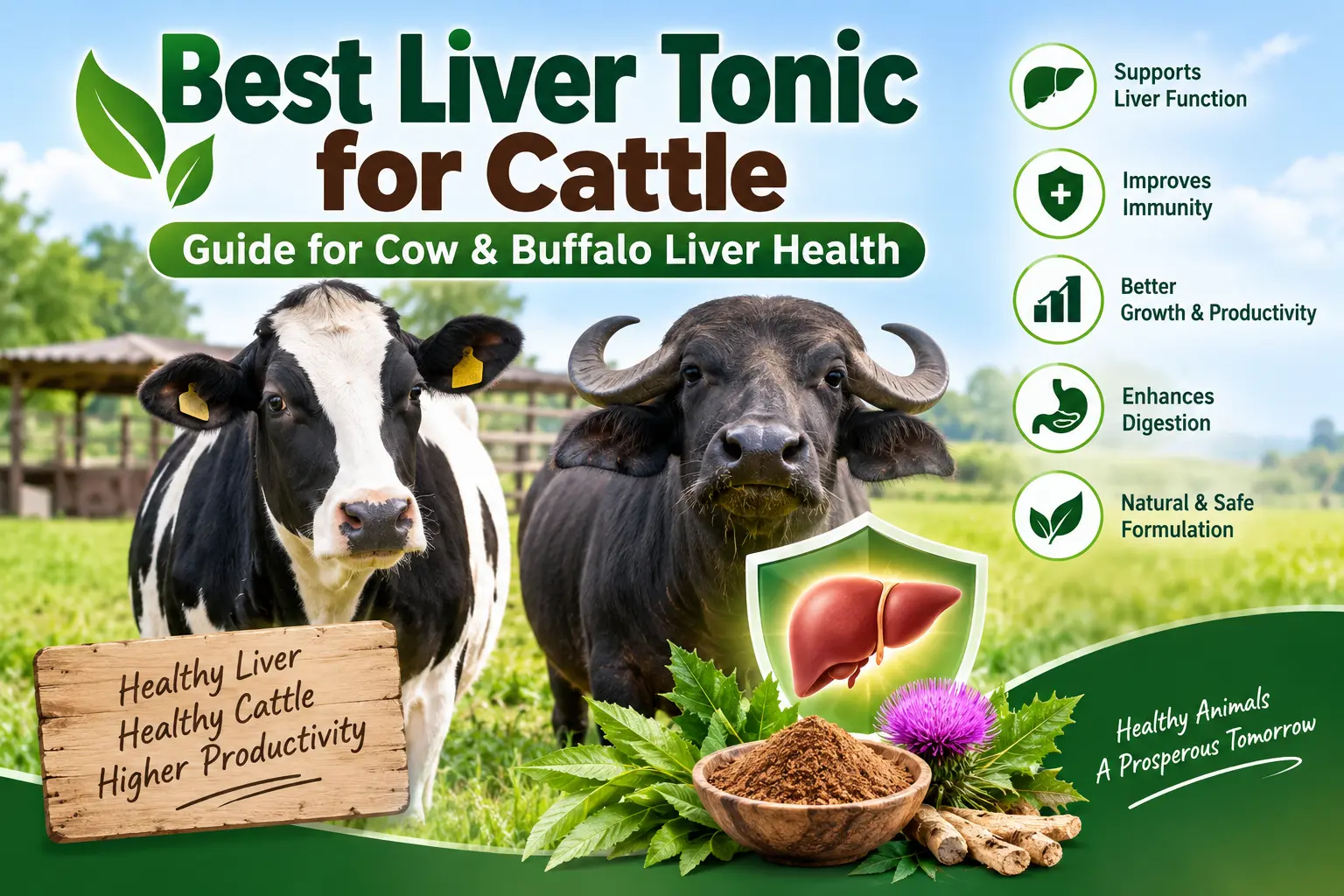
It is essential for the health of cattle that their liver be in good condition, as it has a major impact on their health, digestion, metabolism, and productivity. The liver is important in the processing of nutrients, in storing energy, and in supporting normal metabolic functions. Liver function then becomes a matter of concern when cattle are under nutritional stress, suffer from illness, have a reduced intake of feed, or undergo excessive fat mobilization.
That is the reason why so many dairy farmers and owners of livestock seek out the best liver tonic for cattle as part of their nutritional and supportive care.
Depending on the formulation, a good cattle liver tonic can include things like choline, methionine, vitamins, minerals, yeast extracts, or herbal ingredients. It should, however, be regarded as a supportive nutritional supplement and not as a substitute for veterinary diagnosis or treatment.
Fatty liver is a particular concern at the time of calving and during the early stages of lactation; it can occur when there is a severe negative energy balance since this causes the body’s fat to be released and deposited in the liver, which in turn may lead to impaired liver function and reduced productivity.
What Is a Liver Tonic for Cattle?
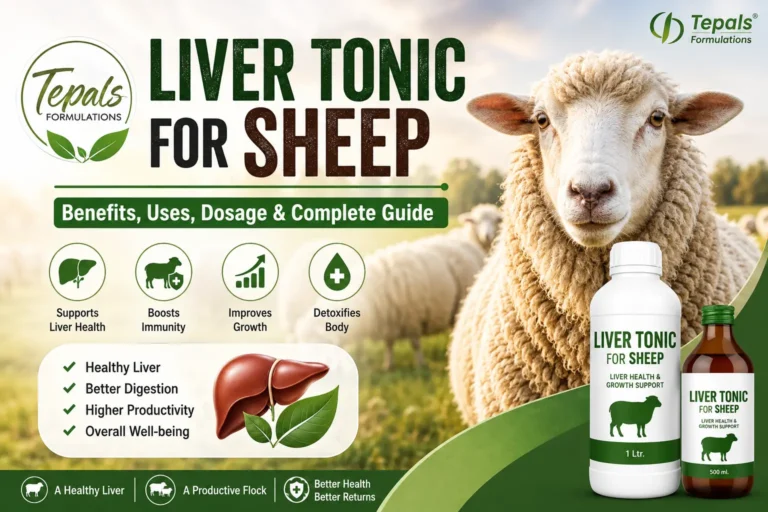
A liver tonic for cattle is generally a nutritional or veterinary supplement designed to provide supportive nutrients for normal liver function and metabolism.
Depending on the product, formulations may include:
- Choline chloride
- Methionine
- B-complex vitamins
- Vitamin E
- Niacin
- Minerals
- Yeast extracts
- Liver extracts
- Herbal ingredients
- Antioxidant compounds
For example, some commercially available cattle liver tonics combine choline with vitamins, minerals, and other nutritional ingredients.
The exact composition varies considerably between products, so farmers should always read the product label and follow veterinary or manufacturer directions.
What is the importance of liver health in cattle?
The liver is involved in several important processes, including:
1. Nutrient metabolism
The liver deals with the nutrients that are absorbed by the digestive system and is involved in the metabolism of carbohydrates, fats, and proteins.
2. Energy management
Dairy cows that produce a lot of milk have high energy requirements, especially at the time of calving and during the early stages of lactation; if the energy balance is poor, then the risk of metabolic issues rises.
3. Fat metabolism
If a cow is not given enough energy through its diet, it might use up some of the body fat it has stored. Having too much fat mobilised can lead to fat building up in the liver.
4. Detoxification
The liver is involved in the processing of a variety of substances and the body’s metabolic by-products.
5. Digestive support
Normal metabolism and digestion depend on a healthy liver, which is therefore a crucial aspect of general cattle management.
When should you use a liver tonic for cattle?
A liver-support supplement may be considered in situations such as:
- Around the transition period
- Early lactation
- Reduced feed intake
- Nutritional stress
- Recovery after illness
- Poor body condition
- Suspected metabolic stress
- Exposure to potentially contaminated feed
- Periods of high milk production
Do not use a liver tonic to mask symptoms such as reduced feed intake, weakness, jaundice, digestive difficulties, or other unusual signs; instead, seek attention for these symptoms rather than using a liver tonic.
If a cow stops eating, shows a marked decrease in milk production, becomes weak, develops jaundice, has digestive difficulties, or shows any other unusual symptoms, have a veterinarian examine her rather than using a liver tonic.
How to Choose the Best Liver Tonic for Cattle
Here are some important factors farmers should consider:
1. Check the composition
Always check the active ingredients and their quantities rather than choosing a product based only on advertising claims.
2. Choose a cattle-specific formulation
Some liver tonics are designed for multiple species, while others are specifically formulated for cattle. Make sure the label clearly identifies the intended animals.
3. Check dosage instructions
Different products have different concentrations and recommended doses. For example, published product instructions range from approximately 20 mL per head of cattle daily for one formulation to 40–50 mL daily for another.
Therefore, no universal liver tonic dosage applies to every cattle product.
4. Consider dairy withdrawal information
If the animal is producing milk for human consumption, check the product label for applicable milk or meat withdrawal information and follow local veterinary guidance.
5. Buy from a reliable manufacturer
Look for clear labeling, batch information, manufacturer details, expiry date, and appropriate veterinary/nutritional quality standards.
6. Consult a veterinarian for sick animals
A supplement may support nutrition, but it should not replace treatment for serious disease.
Best Liver Tonic for Cow vs. Buffalo
Both cows and buffaloes can be given liver-support products, but the appropriate product and dosage depend on:
- Body weight
- Age
- Lactation stage
- Pregnancy
- Health status
- Product concentration
- Diet
- Veterinary recommendation
Some commercial liver tonics are specifically labeled for both cattle and buffaloes, but their recommended dosage can vary by formulation.
Therefore, never assume that the dosage of one product can be applied to another.
How to Choose the Right Liver Tonic for Cattle
Some important things for farmers to consider:
1. Look at the composition
Never buy a product based on what the ads say. Always check the active ingredients and how much of each.
2. Use a cattle-specific formulation
Some liver tonics are for multiple species, and some are designed specifically for cattle. Make sure the label clearly says what animals it’s for.
3. Refer to the dosage instructions
Different products have different concentrations and recommended dosages. For example, published product directions range from 20 mL per head of cattle per day for one formulation to 40-50 mL per head of cattle per day for another.
So there is no one dose for all cattle products for liver tonics.
4. Take dairy withdrawal information into account
Consult the product label for milk or meat withdrawal information if the animal is producing milk for human consumption and follow local veterinary guidance.
5. Use a reputable manufacturer.
Ensure they are clearly labeled with batch information, manufacturer information, and expiry date, and that they meet appropriate veterinary/nutritional quality standards.
6. Seek the help of a veterinarian for sick animals
A supplement can help with nutrition, but should not be used in place of treatment for serious disease.
Best Liver Tonic For Cow & Buffalo
Liver-support products can be given to both cows and buffaloes, but the product and dosage will depend on:
- Weight Age
- Stage of lactation
- Pregnancy
- State of health
- Concentration of product
- Diet
- As suggested by a veterinarian
Some commercial liver tonics are available for use in cattle and buffaloes, but the recommended dose may vary according to the formulation.
So never assume you can use the dosage of one product on another.