Cosmetic Manufacture in India: What Brand Owners Should Understand Before Choosing a Manufacturer
If you are searching for cosmetic manufacture in India, chances are you are already serious about launching or scaling a brand.
You are not here to learn what cosmetics are.
You are here because you want clarity on:
-
How manufacturing actually works in India
-
What compliance really means for your brand
-
How to avoid quality or scaling issues later
This article explains the practical cosmetic manufacturing process in India, from a business and risk point of view—not a textbook explanation.
Why Cosmetic Manufacturing Decisions Make or Break Brands
Many cosmetic brands struggle not because of poor marketing, but because of:
-
Inconsistent product quality
-
Compliance gaps
-
Manufacturing delays
-
Inability to scale production
Understanding how cosmetic manufacture in India works helps you:
-
Ask the right questions
-
Choose the right manufacturing partner
-
Protect your brand reputation from day one
How Cosmetic Manufacturing Works in India (Real Process)
Below is the actual process followed by professional manufacturing units in India for skincare, haircare, and personal care products.
1. Product & Brand Requirement Discussion
Manufacturing does not start with machines—it starts with clarity.
At this stage, the manufacturer understands:
-
Product category (cream, lotion, serum, shampoo, etc.)
-
Target market (mass, premium, export)
-
Volume planning (initial + scale)
-
Packaging expectations
This step decides cost, compliance, and scalability.
Manufacturers who rush this stage usually create problems later.
2. Formulation Finalisation (Standard or Custom)
Once requirements are clear, formulation is locked.
Brands usually choose:
-
Proven standard formulations (faster launch)
-
Custom or semi-custom formulations (better differentiation)
Formulation directly affects:
-
Stability and shelf life
-
Manufacturing cost
-
Ingredient sourcing
-
Regulatory acceptance
A reliable manufacturer explains what is possible—and what is risky—in simple terms.
3. Raw Material Sourcing & Quality Checks
This is one of the most sensitive steps in cosmetic manufacture in India.
Professional manufacturers ensure:
-
Approved raw material suppliers
-
Incoming quality checks
-
Batch-wise traceability
-
Proper storage conditions
Cheap raw materials may reduce cost initially but often lead to customer complaints and brand damage.
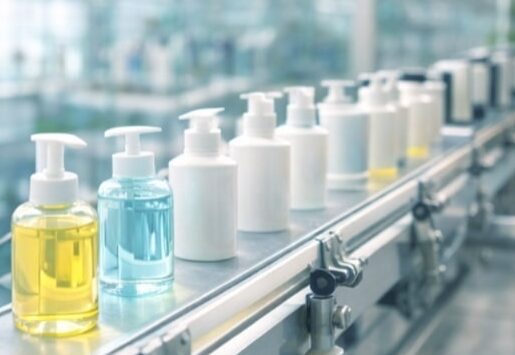
4. Manufacturing & Batch Processing
After raw materials are approved, manufacturing begins.
Depending on product type:
-
Creams & lotions → heating, mixing, homogenisation
-
Serums & gels → controlled blending
-
Shampoos & cleansers → surfactant processing
What really matters here:
-
Controlled environment
-
Equipment calibration
-
Batch accuracy
-
Process discipline
Good manufacturing is about consistency, not speed.
5. Quality Control at Every Stage
Quality control is not just a final check—it runs throughout the process.
A serious cosmetic manufacturer conducts:
-
Raw material testing
-
In-process quality checks
-
Finished product evaluation
-
Batch documentation
If a manufacturer avoids talking about QC systems, that’s a red flag.
6. Filling, Packaging & Labelling
Ones Product QC gets approved , products move to packaging.
This stage includes:
-
Filling into jars, bottles, tubes
-
Label application
-
Batch number & manufacturing date
This step requires attention as majority of time packaging errors lead to regulatory issues or distributor rejections.
7. Documentation & Compliance Handling
Compliance is one of the main reasons brands choose private label or third-party manufacturing.
A compliant manufacturer handles:
-
Manufacturing licenses
-
GMP-aligned processes
-
Batch manufacturing records
-
Regulatory documentation
As a brand owner, your role is to verify compliance, not manage it yourself.
Compliance in Cosmetic Manufacture (India Context)
India follows strict cosmetic regulations under drug and cosmetic authorities.
Before finalising a manufacturer, you should ensure:
-
The unit is licensed
-
GMP practices are followed
-
Documentation is proper and updated
Compliance shortcuts always surface later—during audits, exports, or distributor onboarding.
Scalability: Where Many Manufacturers Fail
Many manufacturers can make one good batch.
Very few can maintain consistent quality at scale.
Before committing, evaluate:
-
Capacity expansion ability
-
Raw material sourcing stability
-
Repeatability of formulations
-
Long-term cost control
Scalability should be discussed before your first order, not after demand grows.
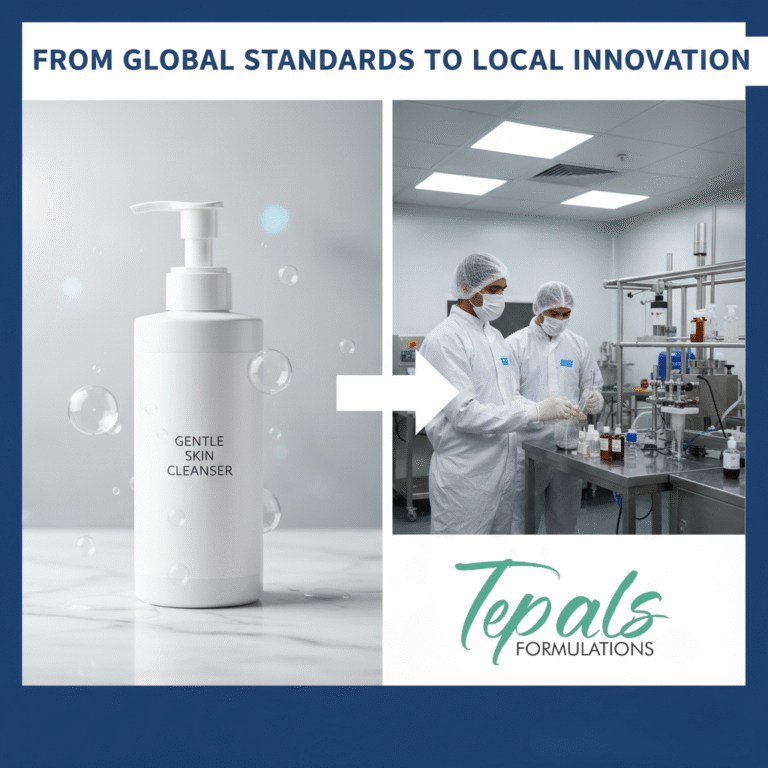
How Tepals Formulations Approaches Cosmetic Manufacturing
As a manufacturing unit, Tepals Formulations focuses on:
-
Clear process flow
-
Quality-controlled production
-
Compliance-ready systems
-
Scale planning from the start
The goal is not just to manufacture products, but to support brands with reliable, long-term supply.
Frequently Asked Questions (FAQ)
1. Do brand owners need a cosmetic manufacturing license?
No. The license is held by the manufacturing unit.
2. Is private label manufacturing suitable for startups?
Yes. It is the most practical and low-risk entry model.
3. How long does cosmetic manufacturing usually take?
Typically 6–10 weeks, depending on product type and volume.
4. How is product quality ensured?
Through raw material checks, in-process monitoring, and finished product testing.
5. Can manufacturing be scaled later?
Yes, if the manufacturer has planned capacity and sourcing systems.
Planning to Manufacture Cosmetic Products?
If you are evaluating manufacturers and want clarity on process, compliance, and scalability, the next step is a direct discussion—not assumptions.
👉 Talk to Our Manufacturing Expert
or
👉 Request Manufacturing Quote
Get realistic answers before you invest time and capital.