Finding a reliable sunscreen manufacturer in India involves much more than comparing quotations. Sunscreen is a technically demanding skincare category in which formulation stability, UV-filter selection, texture, packaging compatibility and support for product claims must work together.
Tepals Formulations offers businesses an opportunity to discuss sunscreen third-party manufacturing for launching products under their own brand. Depending on formulation feasibility and commercial approval, a project may cover formula selection, sampling, packaging coordination, bulk production and private-label support.
This guide explains sunscreen manufacturing, available product formats, the production process and the factors brands should evaluate before selecting a manufacturing company.
Quick definition: Sunscreen manufacturing is the controlled process of developing and producing topical sun-care formulations containing suitable UV filters and supporting ingredients. The finished product must meet its approved specifications for protection claims, stability, safety, texture, packaging and labelling.
Indian Sunscreen Manufacturing Market
Sunscreen is no longer just a seasonal product for the beach and holidays. It has become part of everyday skincare for many consumers.
Demand now comes from several market segments:
- Dermatology and cosmetic brands
- Online-first skincare businesses
- Cosmetic wholesalers and distributors
- Pharmacy-focused businesses
- Beauty salons and aesthetic clinics
- Hotel and travel-care suppliers
- Sports and outdoor-care brands
- Private-label skincare startups
- Export-oriented cosmetic businesses
Consumers also expect more than a high SPF number. They look for lightweight textures, minimal white cast, comfortable application, compatibility with makeup, and products suitable for humid conditions.
This shift creates more opportunities for brands but also makes manufacturing more difficult. A formula that looks good in a sample must remain stable and perform consistently after production, transportation, and storage.
What Does a Sunscreen Manufacturer Do?
A sunscreen manufacturer develops or produces sunscreen products for another business. The product may be manufactured under the buyer’s brand through a third-party, contract, or private-label arrangement.
Depending on the agreed scope, a Sunscreen manufacturing company may assist with:
- Understanding the product concept
- Selecting an existing or custom formula
- Developing laboratory samples
- Reviewing the required SPF and UVA claims
- Procuring approved raw materials
- Conducting batch production
- Filling products into selected packaging
- Carrying out quality-control checks
- Supporting label and packaging coordination
- Preparing batch-related documents
- Dispatching the finished stock
The exact service scope differs between manufacturers. A buyer should therefore obtain written confirmation instead of assuming that testing, packaging, design, registrations or claim support are included in the quoted price.
Sunscreen Third-Party Manufacturing Explained
Sunscreen third-party manufacturing is an arrangement in which a brand outsources production to a qualified manufacturing facility.
The brand owns and markets the finished product, while the contracted manufacturer handles the production activities agreed upon in the commercial contract.
Say a skincare entrepreneur wants to launch a 50-gram matte sunscreen gel but doesn’t have a production facility. The entrepreneur can give a manufacturer the brand name, target customer, preferred SPF, desired texture, and packaging requirements. Once it has been technically and commercially approved, the product is produced and packaged under that brand name.
Private label versus custom manufacturing
These terms are sometimes used interchangeably, but they may represent different project scopes.
| Manufacturing model | How it generally works | Suitable for |
|---|---|---|
| Private label | An available base formula is packed under the buyer’s brand | Faster product launches |
| Third-party manufacturing | Products are manufactured by another licensed facility under contract | Distributors and established brands |
| Custom formulation | A formula is developed or modified for specific requirements | Differentiated skincare brands |
| Bulk manufacturing | The manufacturer supplies the product in bulk containers | Brands with their own filling arrangements |
| OEM manufacturing | Production follows the buyer’s specifications and branding | Larger or specialized projects |
| ODM support | Product development and manufacturing are handled together | Brands seeking broader development support |
A formula requiring unusual ingredients, a specific sensory profile or extensive performance testing may take longer than a standard private-label project.
Why Brands Choose Third-Party Sunscreen Manufacturing
Setting up a cosmetic production plant requires significant investment, technical staff, equipment, utilities, quality systems and regulatory approvals. Outsourcing helps a brand enter the sun-care market without building its own factory.
Lower initial infrastructure investment
The brand does not need to install mixing vessels, homogenisers, filling equipment, water systems or testing facilities solely for one product range.
Access to manufacturing experience
An experienced production team understands common sunscreen problems such as phase separation, excessive greasiness, difficult dispersion, poor spreadability and packaging incompatibility.
Faster route to market
Using a technically feasible existing formula can reduce development time. But the actual schedule still depends on sample approval, packaging availability, testing requirements, and production scheduling.
Scalable order planning
Businesses can begin with a commercially acceptable order and increase subsequent production as demand grows. Minimum order quantities vary by formula, pack size and packaging type.
Brand-focused execution
The buyer can concentrate on positioning, distribution, sales and customer acquisition while the manufacturer manages approved production activities.
Types of Sunscreens That Brands Can Explore
A capable sunscreen manufacturer may work with several product forms. Not every facility or formula is suitable for every format, so availability needs to be checked.
1. Sunscreen cream
Cream-based Sunscreen generally has a richer texture. For normal to dry skin types or moisturising sun-care formulations.
Possible positioning options include:
- Daily moisturising Sunscreen
- Dry-skin sunscreen
- Face and neck sunscreen
- Antioxidant-enriched Sunscreen
- Winter sun-care cream
2. Sunscreen lotion
A lotion usually spreads easily across larger areas and may be marketed for the face and body. It is commonly packed in tubes, bottles or pump containers.
3. Sunscreen gel
Gel and gel-cream formats are popular among consumers looking for a light, non-heavy feel. Developing a visually clear gel with appropriate UV protection can be technically more difficult than simply making a transparent cosmetic gel.
4. Matte-finish Sunscreen
A matte product is designed to reduce the oily or shiny after-feel that many users dislike. This format may appeal to consumers with oily or combination skin.
5. Tinted Sunscreen
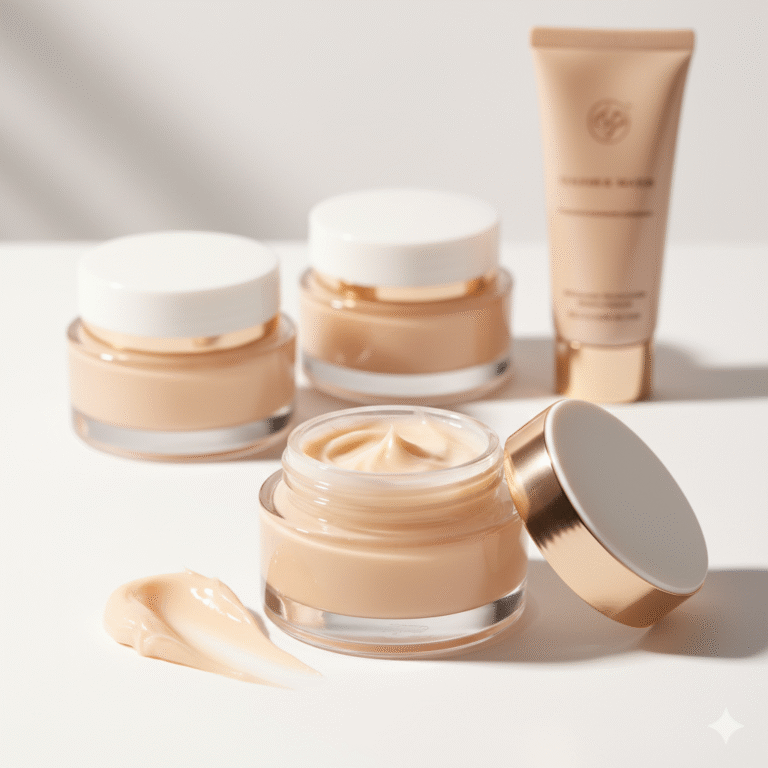
Tinted formulas combine sun-care positioning with pigments intended to give light cosmetic coverage. Shade uniformity, pigment dispersion, and suitability across different skin tones require careful development.
6. Mineral sunscreen
Mineral formulas may contain inorganic UV filters such as titanium dioxide or zinc oxide. Regulation and formula approval are required. Good dispersion of the particles is important, because poor dispersion can lead to uneven application or a visible white cast.
7. Hybrid Sunscreen
Hybrid products use a planned combination of filter types to achieve the required protection, texture, and sensory profile.
8. Water-resistant Sunscreen
A water-resistant product requires appropriate formulation design and claim-specific testing. A manufacturer should not place a water-resistance statement on the label merely because the product feels heavy or contains film-forming ingredients.
9. Sunscreen stick
Stick formats are portable and convenient but require different processing and filling capabilities from conventional emulsions.
10. Use spray-on Sunscreen
Spray Pattern Packaging: Special attention is needed for coverage and safe direction of use. Packaging and claim substantiation should be reviewed before launch.
SPF 30, SPF 50 and PA Ratings: What Brands Must Understand
An SPF number should not be chosen only because it is popular in the market.
SPF primarily relates to protection against UVB-associated erythema or sunburn under the relevant test conditions. UVA protection is evaluated separately and may be communicated through an approved broad-spectrum or PA-related claim, depending on the applicable method and market.
Important points for a brand owner include:
- SPF must be supported by suitable testing.
- A laboratory sample and the commercial batch should follow the approved specification.
- Changing filters, their concentrations or the base can affect performance.
- Fragrance, pigments and other ingredients can affect formula behaviour.
- Water-resistance claims need separate support.
- A higher number does not automatically guarantee a better consumer experience.
- The product must be applied correctly for the labelled protection to be meaningful.
Brands should request the available test reports and understand exactly which formula, batch and test method they cover.
Sunscreen Manufacturing Process: Step-by-Step
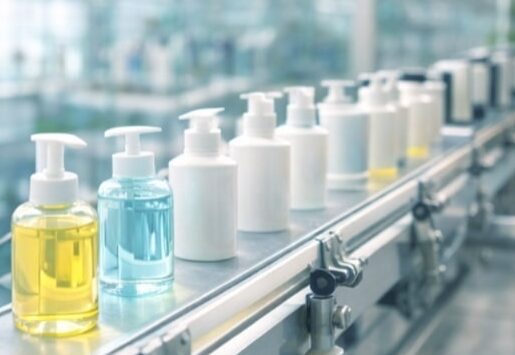
The exact sunscreen manufacturing process depends on whether the product is a cream, lotion, gel, mineral formula, stick or spray. This is a very general description of an emulsion product.
Step 1. Product brief and feasibility analysis
The project starts with a clear product brief. It must be realised:
- Target consumer.
- Intended SPF and UVA position
- Product format preferences
- Skinfeel specifications
- Preference for color and smell
- Package size and packaging style
- Target price for sale
- Quantity expected for order
- Domestic or export markets
- Wanted Marketing claims
The manufacturer then reviews the technical, commercial, and legal possibility of the request.
Step 2: Formula selection or development
The buyer may select an available private-label formulation or request development work.
A sunscreen formula can contain categories such as:
- Permitted UV filters
- Water and oil-phase ingredients
- Emollients
- Emulsifiers
- Film-forming ingredients
- Humectants
- Thickeners
- Antioxidants
- Preservatives
- Chelating agents
- Fragrance or colour, where suitable
- Skin-conditioning ingredients
The choice and permitted level of every ingredient must be checked for the destination market.
Step 3: Raw-material inspection and dispensing
Approved raw materials are received, identified, and inspected in accordance with the manufacturer’s quality procedure. Required quantities are then weighed or dispensed in accordance with the batch instructions.
Traceable dispensing is important because small deviations of the filter system or emulsifier level can affect the final formulation.
Step 4: Preparation of individual phases
Emulsion sunscreens usually treat the oil-soluble and water-soluble ingredients in two separate phases.
Powder or particulate materials must be properly dispersed. Mineral filters must be used carefully to avoid agglomeration and uneven distribution.
A typical emulsion process prepares the oil and water phases separately before combining them. Heating requirements vary according to the selected ingredients and process. Industry processing guidance similarly describes separate phase preparation followed by mixing and emulsification.
Step 5: Emulsification and homogenisation
The phases are combined under controlled mixing conditions. A homogeniser may be used to achieve the desired dispersion and consistency.
Mixing speed, time and temperature matter. Too much or too little shear can change viscosity, cause air to enter, or affect product stability.
Step 6: Controlled cooling
The batch is cooled gradually while mixing continues. Heat-sensitive ingredients, fragrance, or certain functional ingredients may be added during an appropriate cooling stage.
The formula should not be rushed into filling merely because it appears uniform immediately after mixing.
Step 7: In-process quality checks
The manufacturing team may check parameters such as:
- Appearance
- Colour
- Odour
- pH
- Viscosity
- Homogeneity
- Spreadability
- Batch weight or yield
- Absence of visible separation
Approved specifications vary from one formula to another.
Step 8: Bulk holding and final approval
The bulk product is held under defined conditions while required quality checks are completed. Release should follow the manufacturer’s approved quality process.
Step 9: Filling and sealing
The Sunscreen is filled into compatible packaging such as:
- Laminated tubes
- Plastic bottles
- Airless pumps
- Pump bottles
- Jars, where suitable
- Stick containers
- Sachets or trial packs
Fill weight, sealing, coding and pack integrity are checked during this stage.
Step 10: Secondary packaging
Filled products may be placed in printed cartons with batch information and other required particulars. Then the shippers are ready to be stored and sent out.
Step 11: Finished-product testing and documentation
Depending on the product and agreed scope, finished-product evaluation may include:
- Physical and chemical specifications
- Microbiological quality
- Stability studies
- Packaging compatibility
- SPF or UVA-related testing
- Water-resistance testing, when claimed
- Preservative efficacy or challenge testing, when applicable
- Skin compatibility or dermatological evaluation
- Batch documentation
Not every test is automatically included in a manufacturing quotation. Brands should specify the required documentation before approving the order.
Quality Checks That Matter in Sunscreen Manufacturing
Many ranking pages mention SPF 30 and SPF 50 but give limited attention to the evidence behind those claims. This is where buyers should be more careful.
Formula stability
The product should remain within approved specifications during its intended shelf life. Instability may appear as:
- Oil separation
- Water release
- Colour change
- Odour change
- Viscosity loss
- Grainy texture
- Packaging swelling or leakage
- Sedimentation of pigments or filters
Microbiological quality
Water-containing cosmetics need an appropriate preservation system and controlled manufacturing conditions. Microbial quality should be assessed against applicable specifications.
Packaging compatibility
A stable bulk formula may still fail after being filled. The product can interact with tube layers, caps, pumps, liners or printed surfaces.
Compatibility checks help identify:
- Leakage
- Seal failure
- Tube distortion
- Pump blockage
- Label damage
- Product discolouration
- Loss of fragrance
- Container-panel collapse
Claim substantiation
Claims such as SPF, broad spectrum, water resistant, dermatologically tested, or suitable for sensitive skin should have appropriate supporting evidence.
Avoid selecting a manufacturer that treats these statements as ordinary marketing phrases.
How to Select the Best Sunscreen Manufacturer in India?
There is no single “best” sunscreen manufacturer for all businesses. The right choice will be driven by your product, order size, target market, documentation requirements, and budget.
Use the following checklist to compare sunscreen manufacturing companies.
1. Review the production legal contract.
Ensure the facility can produce what you are ordering, and request the proper licensing information.
2. Review sunscreen experience
A company manufacturing common creams does not necessarily have the requisite experience in formulating and testing sunscreens.
Ask:
- Which sunscreen formats are regularly produced?
- Can the company share available sample options?
- What SPF-related reports are available?
- Has the packaging been tested with the formula?
- What are the common batch sizes?
3. Ask for a full quote
The quotation should state if the price includes:
- Formula
- Raw materials
- Initial packaging
- Label, printed
- Carton
- Outer shipper
- Testing
- Design support
- Freight
- Taxation
- Development levies
A low unit price may be expensive when you add on unlisted charges.
4. Review samples properly
Do not approve a sample after applying it only once. Assess:
- Initial spread
- Absorption
- Tackiness
- Greasiness
- Pilling
- White cast
- Eye-area comfort
- Fragrance strength
- Finish after 15–30 minutes
- Compatibility under makeup
- Experience in warm and humid weather
5. Ask for proof of claims
See that the reports confirm SPF, UVA protection, water resistance, and other prominent claims.
6. Know your MOQ
The minimum order quantity could be based on:
- Formula batch size
- Pack size
- Tube or bottle availability
- Printing method
- Carton quantity
- Custom colour or mould
- Testing requirements
7. Monitoring communication and accountability
Manufacturing delays from unclear sample approval, artwork errors or unavailable packaging. Choose a company with specific duties and realistic time frames.
Sunscreen Manufacturing with Tepals Formulations
Tepals Formulations can be considered by businesses exploring sunscreen and skincare products under a third-party or private-label arrangement.
Potential project requirements may include:
- Sunscreen cream or lotion
- Gel or gel-cream sunscreen
- Matte-finish Sunscreen
- SPF-focused sun-care products
- Tinted or specialised concepts
- Custom pack-size requirements
- Private-label branding
- Bulk manufacturing
- Packaging coordination
- Contract manufacturing support
All product formats, SPF claims, ingredients, quantities, testing, documentation and packaging options should be treated as subject to technical feasibility, regulatory review and commercial approval.
This approach protects both the manufacturer and the brand from making unsupported promises before the formulation and project scope have been properly evaluated.
Tepals Formulations Third Party Manufacturing Process
A typical enquiry may go through the following stages:
1. What do you need?
Give the product format, the SPF you want, the pack size, the quantity you want, and the market positioning.
2. Feasibility discussion
The technical and commercial teams review the requested formulation, claims, and packaging.
3. Sample development or selection
An available base may be shared, or development may begin according to the agreed brief.
4. Sample approval
The brand evaluates the sample and approves the sample version in writing.
5. Packaging and artwork finalisation
Tube, bottle, label, carton and mandatory declarations are reviewed before printing.
6. Commercial confirmation
Quantity, rates, taxes, payment terms, testing scope and delivery conditions are documented.
7. Bulk manufacturing
Production begins against the approved formula, artwork and commercial order.
8. Proof and Send.
The finished batch is then checked, packed and despatched as required.
Frequently Asked Questions Sunscreen Manufacturing
1. Who makes a sunscreen?
Sunscreen manufacturers are businesses that make or produce sun-care products such as sunscreen creams, lotions, gels, sticks or sprays. They may also provide private label packaging and contract manufacturing.
2. Which is the best sunblock brand in India?
The best manufacturer depends upon the formula needed, quantity, testing, packaging, budget, and target market. Evaluate a company’s legal compliance, sunscreen experience, samples, documentation, and production capability before you choose.
3. Does Tepals Formulations provide third-party manufacturing for Sunscreen?
Businesses can contact Tepals Formulations for third-party sunscreen manufacturing. Product availability, SPF options, MOQ, packaging, and documentation are subject to feasibility and commercial approval.
4. What is the sunscreen manufacturing process?
The process generally includes product planning, formulation, raw-material dispensing, phase preparation, emulsification or dispersion, cooling, quality checks, filling, packaging, and finished-batch release.
5. Can I start my own sunscreen brand?
With the manufacturing agreement, regulatory requirements, formulation approval, MOQ, and packaging confirmation, the Sunscreen can be manufactured for your brand by a private label or third-party manufacturer.
6. What are the possible formats of sun protection?
Common formats include creams, lotions, gel-creams, matte sunscreens, tinted products, mineral formulas, sticks, and sprays. Actual availability depends on the facility and formulation capability.
7. Can I make SPF 30 or 50 sunscreen?
SPF 30 and SPF 50 projects can be considered, but proper formulation development and testing should be done to substantiate the final claim—availability to be confirmed with manufacturer.
8. What is the minimum quantity of order for manufacturing sunscreen?
MOQ will depend on batch size, formula, packaging, printing and customisation. Don’t ask for a general industry figure; ask for a product-specific quote.
9. How long does sunscreen manufacturing take?
Timing will depend on sample development, testing, packaging procurement, artwork approval and production planning. A custom formulation generally takes longer than an approved private-label base.
10. Is SPF testing required?
An SPF claim should be supported by suitable testing performed using an applicable method. Brands should verify which formula and batch the test report represents.
11. Can the sunscreen formula be customised?
Customisation may be possible for texture, finish, fragrance, colour, supporting ingredients and packaging. Any change involving UV filters or major components of the formula requires careful technical review and may require additional testing.
12. Which papers do I ask for?
Depending on the project, request applicable licence details, product specifications, batch documents, test reports and other agreed quality records. Please confirm document availability before placing the order.
Conclusion
Selecting a sunscreen manufacturer in India requires careful evaluation of formulation capability, quality systems, testing, packaging and regulatory support. A successful sunscreen is not defined by SPF alone. It must also remain stable, spread evenly, feel comfortable, and support the claims the brand makes.
Tepals Formulations provides a point of contact for businesses considering sunscreen manufacturing and private-label opportunities. Please state your preferred format, SPF position, pack size, order quantity & sales market for a feasibility-based proposal.